The University of Not-Bielefeld, like many other institutions these days, has hopped on the environmental bandwagon (electric powered, of course) and, among other things, designed an Action Plan to guide it along its path towards becoming CO2 neutral. (Me? I’ve always been CO2 neutral, except when there’s too much of it in a room trying to kill me. Then I get CO2 hostile and open a window.)
As with most documents of this kind, the Action Plan was long on big words and even longer on bigger promises (and, at 50+ pages, just bloody long too), but surprisingly short on actual, concrete actions. One of the few mentioned, however, was to replace the aging, 40-year-old windows on campus.
Now in replacing the windows on the very large, glass-fronted foyer on our building (good) while also fitting a good many out with solar panels (better), they had to remove a two-meter strip of shrubbery to provide a solid base for the heavy machinery (not great, but understandable), which they then cobbled over when all was said and done (WTF?). Apart from providing even less runoff area for northern Germany’s torrential winter rainfalls, it appears that University’s idea of achieving CO2 neutrality is to remove about 20 square meters of objects that remove CO2 naturally.
On top of that, a very much optional part of the renovations was to add a two-meter large, double-sided LED display panel that, until now, has mostly displayed only advertising. On top of a university generally needing this like Elon Musk needed to sell flamethrowers, the presumably non-solar powered cooling fans are already going crazy in the 20 ºC spring “heat”. The University, it would seem, is taking CO2 neutrality literally instead of trying for the more farsighted goal of becoming CO2 negative.
But then, as one of my colleagues put it, at least they didn’t chop down any trees to ensure that the solar panels see enough sunshine.
I have another confession to make. Like countless other individuals, I have been flying under a false name for literally decades now. (Probably another good reason for keeping this blog anonymous.)
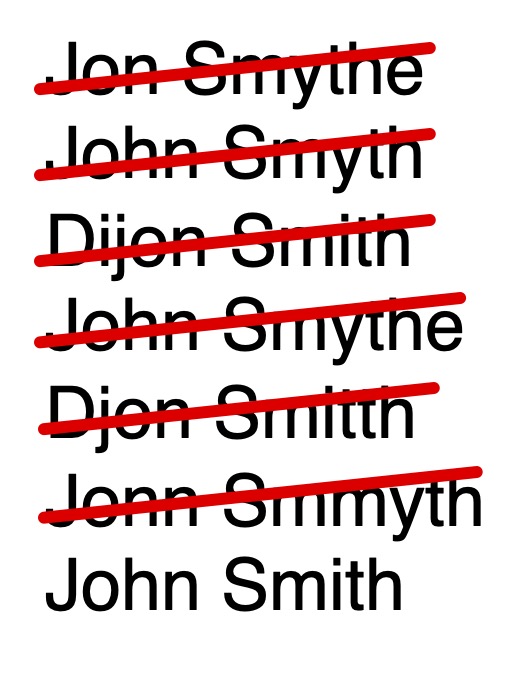
Airline reservation systems (if not many computer systems generally), you see, have a problem with hyphenated last names and, as I recently read, problems with any names containing any character that is not found in the English alphabet (or, more precisely, the ISO basic Latin alphabet). Spaces, however, are ok though. Exactly why this is the case is somewhat of a mystery and why it’s still the case is an even bigger one. You can sort of understand it from way back when when computer systems were a lot more primitiveand, more likely than not, programmed by some nerdy white male from the Western world. But the intervening decades of progress, both technological and societal, mean that the computers have not only become more powerful, but also that the nerds programming the software they run now increasingly include other genders and ethnicities.
Nevertheless, the only solution available to me remains relatively simple and completely non-technical: forget the hyphen and either run the two parts together as a single name or use a space instead. (Or, equivalently for other fellow victims, to remove all the fancy accoutrements from the letters from those languages that like to embellish their ISO-derived alphabets with all manner of squiggles, dots, and lines. Exactly how Malmö Aviation, Nicaragüense de Aviación or even O’Connor Airlines handled their own names remains unknown. It’s perhaps telling, however, that all three are now out of business. Just waiting patiently for the same fate to befall Boliviana de Aviación or Widerøe, among many, many others.) Contrary to the airlines’ explicit instructions, this meant that the name on my ticket no longer matched that on my passport one-to-one. But this was only yet another discrepancy between the actual and the realized that airlines didn’t seem to mind (like, for instance, with boarding times), so neither did I. I certainly had none of the problems John Scott-Railton described in his now apparently deleted blog piece (but summarized here).
Until today …
With the most recent update to their systems (AKA enhancement of my online experience), this tacit agreement with one of my go-to airlines here in Europe broke down. They happily took my money and my last name (with a space) to purchase a ticket with them, but no longer let me associate my stored passport details with the ticket. And with absolutely no reason given either. The system simply refused to accept the passport as it had in the past.
The airline’s help line was anything but because, as is becoming increasingly common, support issues are initially handled by virtual assistants, which, true to their name, are virtually useless. No matter what I typed in as my question, the response was always “Or find out how you can enrich your journey…” with a link to my trip details. Anyone who’s worried about AI taking over the world someday just has to deal with one of these algorithmic numbskulls a few times to realize that they can’t even take over a first-generation Furby with mange and a dead battery.
The breakthrough to the breakdown came when I tried to re-enter my passport details from scratch and the system told me that my hyphenated last name was “not a valid name”. (Others elsewhere have had this experience too.) I’ve got two different countries (Canada and Germany) saying otherwise—which is two more than Elon Musk could say for his son X Æ A-12—but the airline’s system was adamant: hyphen = invalid. If I removed the hyphen, my (fake) last name was suddenly acceptable. Although the system did not complain about the invalidity of my saved, hyphenated passport details, I tried removing the hyphen just the same. And, εὕρηκα!. Just like after a nice, long, hot bath, everything was cool again: I could associate these false passport details with my ticket.
Now I just need to forget the warning that the system brought up that my passport details have to match the information on my passport exactly. Fake name on the ticket? Experience shows it to to be unproblematic. Fake name on my passport details? Let’s wait and see. Border guards and probably the TSA too tend to be far more pedantic and far less forgiving than gate attendants.
It’s a truism that you can never make anything foolproof because fools are so ingenious (or variations on that theme). As an amateur white nerdy male, I know that it’s impossible to trap all the ways that other people can bring my simple computer programs to their coded knees. But why is this ISO-conformity all still a thing in this day and age? Could it be that the airlines are hiring precisely these ingenious fools to program and simultaneously foolproof their reservation systems?
Might not be that far off the mark. Seriously. How else can you explain getting push notifications to check in for a flight that already took off nine days earlier?
(And, no, Lufthansa, is much more of a “got-to” rather than a go-to airline for me …)
It’s hardly an original observation on my part, but boarding an airplane does not rank among life’s most pleasant experiences: endless queues of aggressive people with elbows flying all jockeying for the best position. And all that before they’ve even announced that the gate is open for boarding.
(The obvious exception here, of course, are the Brits, who love to queue. For any reason …)
Let’s face it, apart from having to get on the plane, nothing about boarding makes any sense. To start with, no airline has really discovered an efficient way to get people in their seats. (Anyone else find it strange how you’re in your seat on a plane?) The seemingly intuitive way of loading up in blocks from back to front seemingly stops at being intuitive. Intuition, it appears, is just another late arrival in the airline industry. This back-to-front scheme was actually only developed in 2003 (!) with the assistance of industrial engineers at Arizona State University to replace the older, even less intuitive system of filling the plane up from front to back.
More importantly, despite it or some variant on it arguably being the default way to fill most planes, the back-to-front system is one of the slowest methods out there. (So much for that particular group of industrial engineers.) Instead, the most efficient system according to computer modelling by Jason Steffen, which he developed in his spare time while working as an astrophysicist at Fermilab, is one where the plane is filled in alternating waves from back to front: first the window seats in the odd-numbered rows, then those in the even-numbered rows before restarting the system for the dreaded middle seats and then again for the aisle seats.
For those able to wrap their brains around that, it’s said to be about 20-30% faster than the best among the conventional systems and twice as fast as back-to-front. However, it is unfortunately based on two utterly impossible preconditions. First, there are no groups, families, or other clusters among the passengers. Second, everyone has to buy in to such an overly complicated and seemingly unnecessary system. (To which all the admin types can only ask where the problem with precondition #2 is.)
As for actual, existing systems, KLM is at least honest about the whole thing to say that theirs is essentially based more on bribery than it is on seat location: the more money you’ve given them for your current (first / business class) or past flights (frequent-flyer group), the earlier you board. (Ok. KLM didn’t actually use the word “bribery”. I think they refer to it as something like “loyalty” instead …)
Lufthansa, by contrast, tries to straddle the line between loyalty and logic, with loyalty logically getting priority. After the big spenders board, the remaining tightwads are sorted into zones 3 to 5, which are designed to fill the seats progressively from the window to the aisle, the so-called WilMA (for window, middle, aisle) system. As good a system as WilMA indeed is, the problem is that it’s also ignored about as often as its namesake on the Flintstones. As such, only zone 4—and that’s four as in “free for all”—effectively exists. Or, in other words, pretty much KLM’s system.
Or in other, more formal words that assume that queuing aggressiveness does not correlate with seat position, random. And a random system (as opposed to an open one where there are no seat assignments), interestingly enough, appears to be among the best.
Now, even if the airlines, in doing nothing, have fortuitously stumbled onto one of the more efficient systems for loading passengers on to the plane, it still doesn’t explain the growing trend of inserting another layer of chaos by using a bus to shuttle them between the gate and the plane in its “apron position”. As with so many other, recent “improvements” by the airline industry today, this feature is designed entirely to save them money at the cost of your convenience. And peace of mind.
Now how using busses saves the airlines money is a mystery to most. Including me. They still need to rent a gate, often using ones that could lead directly to the plane via a jetway anyway, and, although they don’t have to hire anyone to operate that jetway for them anymore, they still need to pay for at least one bus with its bus driver together with at least one set of stairs at the plane with its, umm, stair driver. As well as all the people to ensure that you don’t absentmindedly walk into the jet engine. Ryanair, those undisputed champions of cost-cutting, at least have you walk to your plane so as to dispense with the bus entirely.
By contrast, the loss in convenience is a mystery to precisely no one. Apart from making them look forward to the comparatively wide-open spaces of economy class, all busses do for the passengers is to make their increasingly tighter connection times increasingly tighter. And even more so if they have to go through security again because of it, something that is thankfully becoming more and more of an exception. (Except if you’re going through London Stansted.)
(My extreme, absurd experience in this regard was one time when I was faced with a 45-minute connection with busses on both ends of the deal. After sprinting across two terminals, I made it to the new gate just as it was closing, only to get bussed back to the exact same plane with the exact same flight crew. Eliminate the busses and the transfer would have taken exactly zero seconds as opposed to the several years off my life expectancy that it actually did.)
Ironically, using busses should actually speed boarding up because it adds another layer of randomness to the boarding order. Pity about the added travel times and occasional gridlock it entails …
In the end, however, what really makes no sense whatsoever is when the airlines continue to insist on using their well-thought out, if not zoned-out, systems to board the bus. Why? What does your “loyalty” get you then?
First through the gate, but last off the bus to your complementary champagne …
Together with nearly 10 000 other people, the comedian Richard Lewis died the other day in the US. The media, of course, was gushing. About his talent. About him being a comic’s comic. About his legacy. Like him or hate him (or even wonder who he was), this piece really has nothing directly to do with Lewis, but with the gushing of the media instead.
We all know that the job of the media is not to report the facts, but rather to get us to believe their interpretation of them. Or at least of the facts they choose to present to us. This has been true ever since Adam and Eve gave an interview about that apple conspiracy and has only accelerated in the past couple of years with the rise of social media. As bad as all that is, it seems like the media is no longer even trying to break a sweat in doing so.
None of the four clips are either that funny or even that clever, and none more painfully so than the two bookending ones from Curb Your Enthusiasm. Even the example clip of him getting “huge laughs in real-life interviews” got only mediocre chuckles from the audience. And none whatsoever from Dr. Ruth. (Now, apart from the obvious, if there is something that Dr. Ruth is known for, it’s that she loves to laugh.)
Again, this really has nothing whatsoever to do with Lewis in particular or even with Curb Your Enthusiasm. But if you want to convince us that Lewis was a master comedian then perhaps try choosing some examples of him actually being comedic. And, if he perhaps wasn’t a master comedian in the first place, then don’t try to convince us that he was. (Unfortunately, the latter amounts to saying that the media shouldn’t engage in hyperbole. Now wouldn’t that be a historic event …)
Welcome to the bonehead commemoration of the day …
Working right up until the last second, the admin elves at the University of Not-Bielefeld published a set of 11 recommendations shortly before the Christmas break to advise its teaching staff in how to deal with generative AI in the classroom. And then took a well deserved seven-week break before facing the even more arduous task of translating it into English.
It was all worth the wait …
Given the sheer number of brilliant, academic minds devoted to this problem (the Vice President of Student Affairs, the Department of Student Affairs, and the Council of the Deans of Students), you’d expect something insightful, inspiring, and cutting edge to guide us. But, as with most things done by committee, the end product was instead a near-sighted, dispirited, and blunted piece of buzzword bingo that, as always, left all the real work to us:
stay informed
foster and nurture students’ competencies
acknowledge and value
review and adapt
sanction violations
define and communicate
But, most importantly, they got to use the word “overarching” by cramming their 11 recommendations into four overarching areas.
(Now if there’s one word that deserves to be eliminated from the English language—together with those people inclined towards using it—it’s “overarching”. The problem is that you expect something along the lines of the Arc de Triomphe when you hear it, but usually get the Golden Arches served up to you instead. (Which is not intended as a slight against McDonald’s. At all. Love it or hate it, it’s still fast food and not a surprisingly French-made architectural masterpiece.) Call it overarching themes, overarching concepts, or overarching whatever-you-wants, they’re all just categories and the use of the word is always much more of a case of overreaching than it is of overarching. This is especially true here. Eleven recommendations dissected into four areas means that some of the latter just barely fit the definition of a category.)
And then there’s the escape clause in which they note that the Recommendations are merely a “product of their time” and so subject to change as generative AI develops. Not only that, but that they also welcome any comments or suggestions to help develop “additional action-oriented recommendations and offerings.”
C’mon. Really?
It took them over a year since ChatGPT and generative AI shattered our illusion of safety to come up with a document as bland, useless, and action-oriented as tapioca? And also one to recommend pretty much what we’ve all been doing while waiting for their received wisdom to rear its ugly, administrative head?
(Why ChatGPT is almost universally vilified for starting the whole AI crisis is beyond me. Listen to the media and you’d think that it’s been systematically destroying humanity in Skynet-like fashion since it came online. (BTW, that’s ChatGPT, not the media, destroying humanity. But it’s a reasonable misunderstanding to make. Interestingly, ChatGPT went global almost precisely 25 years and three months to the day after Skynet became self-aware. Some say it’s a coincidence …) It’s not like ChatGPT invented AI or even a dangerous form of it. The social-media companies with their “algorithms” were way ahead of them there. But somehow their algorithms remained just plain ol’ algorithms and didn’t become dangerous AI. What many forget is that generative AI needs humans to make it dangerous. Just ask the poor guy in Hong Kong who wired $25 million dollars to scammers after they deepfaked him out with a video conference call including the company’s CFO. So, seriously, just how dangerous is generative AI really going to be in a teaching setting, apart from the fact that it’s hard to detect? At worst, it’s merely yet another form of cheating that we are being forced to detect. More charitably, it’s Google with a summarize function. Or, in other words, Wikipedia.)
In any case …
Those suggestions they wanted? How about actually offering something, like access to a tool that will help us teachers to recognize AI-generated content instead of recommending that we “inform” our students to adhere to “good academic practice” by “acknowledging” when they use AI and otherwise “sanctioning violations” that we can’t even detect? That’ll stop any cheating attempts …
Just for fun, if not to “stay informed” about generative AI, I ran the Recommendations through GPTZero, one of many web services that are designed to detect AI-generated content and that are also not mentioned in those same Recommendations. Interestingly, GPTZero was only moderately confident that the German version was written by a human (77%) but highly confident that the translated English version was (87%). Not sure what this says exactly about the Vice President of Students Affairs et al., but it might be worth considering packing some Linda Hamilton type heat, if not a few Turing tests, to the next committee meeting in case they really are cyborgs. (Or just shoot first and ask the questions later. You can never be too careful.)
Even more fun: I compared the English version of the Recommendations with the DeepL translation of the German version using the university provided access to the PlagScan software (which now finally works). The end result of 19.6% of the content being either word-for-word identical or comprising slight textual changes is not surprising given that we are talking about two translations of the same source document. However, DeepL is the acknowledged translation engine of choice for central admin, being used to generate the English translations in their bilingual e-mails for instance. More to the point, it also uses generative AI for its translations such that using it and not acknowledging that fact runs counter to the Recommendations (running because they’re action-oriented, remember?) as a violation of “good academic practice”. Now, I’m not necessarily trying to imply anything but those bilingual e-mails (including the one announcing the Recommendations) no longer mention the use of DeepL and I somehow doubt that all those admin types have suddenly become fluently bilingual.
Or at least bilingual to the point where I as a native speaker can’t tell that a non-native English speaker has written the text …
Most Germans will deny it, if only because they cannot pronounce the voiceless dental fricative (/θ/, one of the two “th” sounds), but they actually live in a theocracy, making it currently only the third western country together with the Vatican and the US to do so.
There are more than a few obvious signs pointing to this, the first being a virtual countrywide ban on dancing on Good Friday that I’ve railed on about before. However, this Tanzverbot is only the most famous restriction on what are known as “silent holidays” in Germany. These are mostly public holidays with religious roots where any number of otherwise normal activities are outlawed to promote reflection and maintain the solemnity of the day. Good Friday is the best known and most universal of the bunch, but there are others as well as “silent days” that don’t double up as public holidays. The list of banned activities varies from state to state and day to day, but generally includes dancing and musical events, circuses, public sporting events, and certain movies.
Yes, to prevent our thoughts on these days of contemplation from being led too far astray, the movie industry through its German self-regulatory rating body, the Freiwillige Selbstkontrolle der Filmwirtschaft (FSK), has been putting together a list of movies since at least the 1950s that are banned from being shown in theatres and on TV on the silent holidays. (You can, however, watch the films on Netflix and the other streamers in the throes of your little cabal for some unknown reason, further begging the question as to how something can be illegal only on certain days and then only in certain ways.) The List contains obvious smut like the 1974 Japanese anime film Heidi, Girl of the Alps together with a bunch of other similar pornos and slasher films that no one probably should ever watch, but not those stalwarts of religious purity and paragons of morality in the form of either of the SAW or Fifty Shadesfilm series.
Could be that poor Heidi just needed a better upbringing. Too bad that the FSK also had Mary Poppins doing hard labour since 1995 as well.
Be that as it may, to promote that desired clarity of thought, feel free to ring the Church bells as long and as loud as you want on the “silent” holiday of your choice (and probably naked too while you’re at it given that Frankfurt’s highest regional court recently upheld a landlord’s right to sunbath nude in the courtyard of his building), but don’t you dare think about subverting anyone through any satanic Swiss-Shintoist cinema.
Many of these observations and ironies about The List are not original on my part. Hell, there’s even an entry in the US Library of Congress blog about it. Nevertheless, as infamous as The List is and given both its legal and moral ramifications, it is surprisingly hard to find. Buried somewhere on its website, the FSK does provide a list of movies that had been blacklisted between 1980 and 2015. However, on the same document, they themselves note that even this catalog is not accurate because of potential data-entry mistakes. (Apparently, this is how Heidi made the list, something the FSK goes to great pains to explicitly point out on the document. Wonder why …) In addition, they add that many of the movies that are legitimately on this list could have subsequently been taken off of it upon appeal as well as because of the changing ethics and norms in German society. (This latter shift is probably best illustrated by the fact that <1% of the movies released since 2020 made the list, compared to the high of 65.9% of all movies in the 1960s being silently banned.) Instead, the FSK say that more accurate results can be found through their website’s (extremely slow) search engine, but even here I found it impossible to find any movie that was on The List.
(A word of warning. For those wanting to hunt down The List, it’s not only impossible to find, but obviously also in German for which I apologize. Twice. First, most of the film titles might not be easily recognizable to non-German speakers. Second, German translations of film titles tend to be boringly factual. Painfully, boringly factual. For instance, the German title of Driving Miss Daisy, namely Miss Daisy und ihr Chauffeur, is really just a census of the film’s major characters, whereas the English title at least has a verb to give it some movement. The Shawshank Redemption comes out as Die Verurteilten (“the convicted” (plural)), which misses the point of the movie entirely. Or the German translations tend to overexplain the title, another variation on over-factualization. For instance, the straightforward Top Gun becomes Top Gun – Sie fürchten weder Tod noch Teufel (“they fear neither death nor the devil”). One of the few exceptions to all this is for the claymation film Chicken Run, where the German translation of Hennen Rennen has the same clever double meaning, but with an internal rhyme to boot! So there …)
In any case, if changes in society mean that movies can become watchable on the silent holidays, including movies with music and dancing (e.g., Dirty Dancing, which is officially not on The List and, as far as I can tell, never has been), then why continue outlawing music and dancing?
But, Heidi notwithstanding, this is to some extent all grown-up stuff. Instead, any good theocracy knows to get them while they are young by offering religion, sorry “religious studies”, in school.
And this is actually codified in law. German basic law (Grundgesetz) officially enshrines religious instruction as part of the public-school curriculum, albeit with some extra caveats on top of that here in Not-Bielefeld: there have to be 12 or more students belonging to the same religion, there’s a willing and qualified teacher in that religion, and the parents of those students under 14 approve of it all. Otherwise, the kids should go in the default class of ethics and norms, hopefully without any of the FSK‘s temporally flexible insights into it. However, the elementary school here in Not-Bielefeld where my daughters went was small (only two parallel classes for each grade) and there were no teachers qualified to teach ethics and norms. (Ironic that. One can teach religion, but know nothing about ethics …) Thus, parental approval be damned, it was religion for all and learning important, general religious concepts like the Lord’s Prayer and the Ten Commandments. Other religions? That they even existed was something left for the very last grade in elementary school.
I have nothing against religion being taught in schools, including all the death, mayhem, and other assorted human-rights violations it was responsible for historically. It just shouldn’t be in elementary schools and also not-so-secret advertising for any particular one. Religious instruction? I believe they already have something called churches for that. (Or are those too busy providing “evolution instruction” these days?) Despite their internal redundancies and obviously plagiarized content, I can sort of accept the teaching of the Ten Commandments because there are universal moral and ethical principles underlying them that go beyond any single religion, if not religion as a whole. But the Lord’s Prayer? Granted, knowing it could win you $200 in Jeopardy, but still …
The problem here is that elementary-school kids tend to idolize their teachers to the point of believing anything they say over their boring old parents. A case in point was when my eldest daughter came home from school one day and told me that I had been saying “clothes” wrong all this time. Instead of my monosyllabic “klowz”, her English teacher told her that the correct pronunciation was the disyllabic “klow-THEZ” and with that emphasis. (The irony here is, of course, beautiful insofar as the northern German, non-native English speaking teacher is indirectly telling the born and bred, native English speaking Canadian how to speak his own language. Technically, she was right, at least up to that extra syllable. Clothes does indeed possess the second “th” sound, the voiced dental fricative (/ð/), but non-technically, this is English we’re talking about. If we want to voice the voiceless fricative and silence the voiced one, well, that’s our God-given right, isn’t it?) I imagine (read: sincerely hope) that the teacher was simply overemphasizing that fricative so that her students wouldn’t be condemned to saying “zis” and “zat” for ze rest of zeir lives, but who know-THEZ?
Now, I say “tend to idolize” because then there’s my youngest daughter. I didn’t know it until years later but she actually got permanently kicked out of her religion class for continually asking how evolution and the Big Bang fit into the whole scheme of things. (Or, in other words, not taking the gospel truth as the gospel truth.) So instead of learning about (a single) religion, she got to watch TV in school for an hour. For years. Pedagogically more than a little suspect but then so was the entire religion class to start with, wasn’t it?
And, finally, there’s the bottom line …
Theocracies cost money to run and the churches have the German taxpayers right where they want them. In many countries, churches are charitable entities and so pay no income tax despite raking in untold amounts of money via donations and, more importantly, through all the property and businesses they own. The inherent contradiction of this situation is finally being realized such that there are debates also starting in some of these same countries as to whether or not to end this tax-exempt status for the churches.
But in Germany?
Not only is there no debate, but in all German states except, ironically enough, the very religious Bavaria, the government actually directly funds the poor, destitute churches by having its tax offices collect a special church tax from the devout among the taxpayers. And there’s no debate there either: depending on which state you live in, an additional 8-9% of your income tax automatically goes to your church (apparently with a 3% handling fee for the tax office) if you’ve been christened or baptized, even if it was against your future will by your good-meaning parents.
And there is some serious money at stake here too. For instance, that 8-9% worked out to some 9.2 billion Euros in 2010 (and, by extension, up to 276 million Euros for the tax office), contributing in no small measure to the net worth of the German Catholic Church, which is estimated to be anywhere between $26 billion and 430 billion Euros. Even the more conservative of those two numbers (conservative because we are talking about the Catholic Church here), makes the German Catholic Church on its own the fourth richest religious institution in the world and is more than ample to place it on the Forbes 2000 list and in the top 35 of the wealthiest German companies ahead of, for instance, that little known shoe company called adidas.
Despite these embarrassing riches, there are separatereports of the tax office / churches investigating the religious background of foreigners who have moved to Germany to ensure they aren’t dodging their tax burden like the churches are. In the end, the only way out of paying the church tax involves some degree of pain, either in the form of dying or surrendering about 30 EUR and filling out the requisite paperwork to formally leave the church.
And even then the churches have found a way to tax the non-devout in the form of “special church money” (besonderes Kirchgeld) based on the joint gross income of those couples living in mixed marriages. Thus, the non-religious person indirectly pays taxes to the church for having fallen in love with a devout person who, in turn, actually pays taxes twice (presumably as punishment for marrying the heathen in the first place) because they also have to pay their normal church taxes. This all apparently only comes into play when the devout person has no to little income of their own. Or, in other words, is poor, and so belongs to exactly one of those demographics in society that the churches are supposed to be helping out.
And yet despite being a paying customer, whether directly or indirectly, my Catholic wife is still officially forbidden from taking Holy Communion or even going to confession because we only married in the eyes of a civil servant and not God. But, thankfully, because we are talking about charitable organizations here (at least in the tax sense of the word), all these church taxes are fully tax deductible …
Some time ago, I wrote how admin here at the University of Not-Bielefeld (if not admin types the world over) like to send chain e-mails, where some e-mail from central admin is successively forwarded down the chain of responsibility (central admin to faculty to department to …) with no one bothering to clean up all the forwarding details along the way. The end result for the sucker on the end of the chain is an unnecessarily long e-mail that begins with “do this” followed by roughly 30 minutes of scrolling to see what actually needs to be done. (Which is usually to click “delete”.)
Well, central admin here at the University went one step better and have now developed chain-link e-mails …
An e-mail came around the other day announcing the exciting news that the President’s Office had established new, formal guidelines for the “standardized wording” of the university address to be used on all scientific publications. And to see the guidelines and additional information, all you had to do was to simply click the link provided. (I know. Already sounds like a phishing e-mail, doesn’t it?)
Only problem was, clicking that link took you to a University webpage that merely repeated the content of the e-mail but with another, different link to actually get to the guidelines. In other words, one pointless click too many: why not just (also) include the guidelines as an attachment to the e-mail in the first place?
In reality, however, it was two pointless clicks too many …
… because the guidelines basically amounted to nearly three pages of the pretty damn obvious. And the all-important, Standardized Wording boiled down to the this:
the name of the university always has to appear in the address and then always as the full name in German (e.g., Baron Munchausen Universität Nicht-Bielefeld; sorry, apparently I’ve been a little lax on this until now) and
e-mail addresses always have to be the work e-mails of university employees, not private ones.
Everything else like the departments and working groups? Who cares! Choose any order you like and feel free to use either English or German. Just make sure to use the full German name of the university.
Seriously? It took them 19 days and two links to inform us of guidelines equivalent to that we should be putting our socks on before our shoes?!
Ostensibly the whole reason behind this move is so that publications from the university are easier to find and to associate with the university. Carrying on, this information can then be used to more easily collate data on how productive both the university as a whole as well as its academic staff have been.
Again: seriously?
For one thing, it’s really not that difficult for computers, even before the dawn of ChatGPT and the hovering apocalypse of AI, to hone in on variants of something like the name of a university. I know this for a fact because my last name is prone to many weird, wonderful, and downright creative misspellings, yet Web of Science as well as Google Scholar have managed to associate most of them with my real name. It’s even easier with many German universities (worth mentioning) because they carry both the name of a famous historical German figure (always male; no famous German women, I guess) as well as the city it’s located in.
For another, it’s only suggested in the guidelines that the authors use a standardized name under which to publish. But, if one of the express goals of the guidelines is to associate papers with both the University as well as with individual academic staff, then shouldn’t this be more than a mere suggestion?
In reality, the guidelines have more to do with the University’s blossoming love affair with corporate design than anything else. In the past 10 years or so, they’ve redesigned the University’s logo twice, with knock-on effects on everything it was used on like letterhead and PowerPoint presentations. But because the first update was essentially ignored. they went to extra lengths to make people aware of the more recent one. This included releasing a promotional, teaser video filled with all the empty advertising buzzwords they could think of before the official unveiling as well as a 58-page user manual on how to properly implement it on everything from flyers to brochures to business cards to certificates and diplomas to academic posters and presentations.
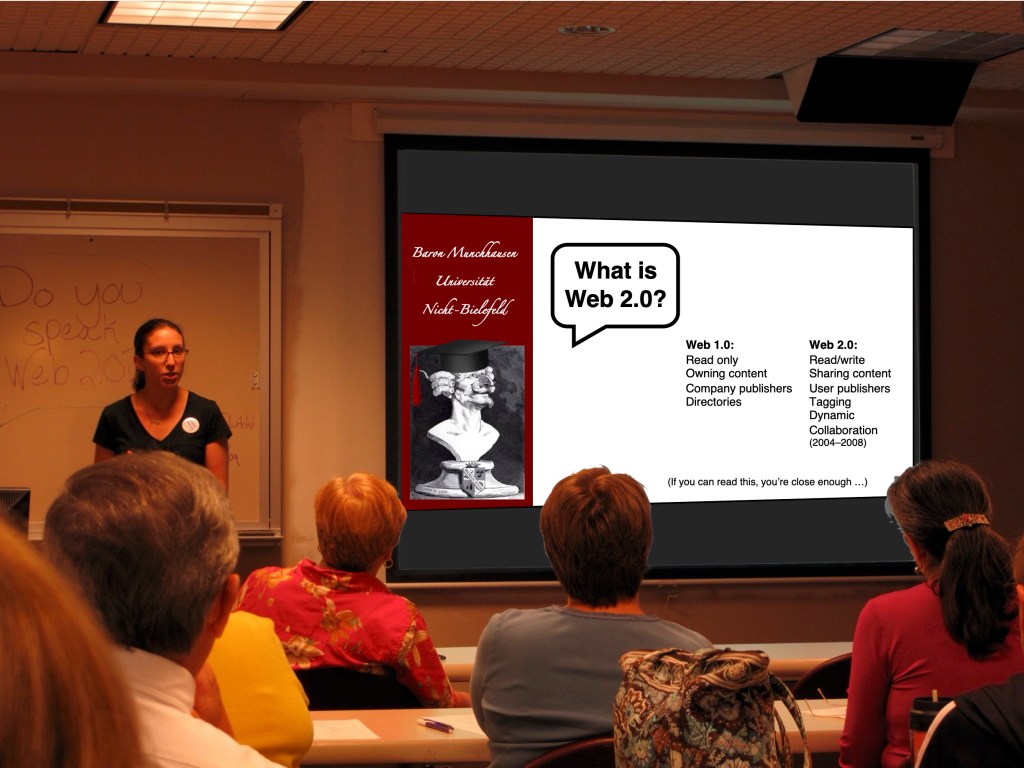
Despite all this, the second update is receiving about the same amount of attention from me that the first one did in general. Really the only areas for me where it’s relevant are my slides for teaching and for scientific conferences. (Do people even do business cards anymore, especially in Academia? I purchased like 200 of them from the University when I first arrived, overly keen, 15 years ago and have about 197 of them left, all with the wrong corporate design now too.) Before, when there was no manual to again guide me through the obvious, I simply put the University logo on the first, title slide of each presentation. But the new guidelines now stipulate that the corporate design has to be used on each and every slide. Why? My natural expectation here is that the audience is there for the scientific content rather than knowing where I work or teach (and my sincere expectation is that the students already know which university they’re at) and that they’re clever enough to remember it having seen it once. Having the logo as an ever-present sidebar also means that there’s that much less space for real content. More personally, it also means that I have to redesign more than a thousand slides, both because of the loss of space but also because the new corporate design has only been implemented for PowerPoint slides in widescreen format, which I don’t use. (And which is generally useless for teaching because the projection areas in most of the University’s classrooms were set up for the much squarer picture that was the default before widescreen. So now you’re trying to fit an overly wide picture in an overly narrow space making for some overly small text.)
I figure if the University has the time and money to redesign their logo every couple of years AND now to make promotional videos about it, then they can also invest some of the same to hire someone to redesign my slides as well.
Unless, that is, they’re already working hard on the next set of corporate guidelines and redesigns …
Apart from the universal, default strategy of continually growing its customer base, another key element of WordPress’ business model must be to keep their band of bloggers happy, motivated, and writing.
Having already gotten me to sign up (= growth strategy), WordPress immediately shifted to inundating me with announcements about how I could make money from all my ramblings (= motivational strategy), something that has thankfully abated in the meantime. Instead, they’re now appealing to my artistic side / pride to keep me writing. Case in point was my 2023 Year-in-Review summary that they sent to me the other day.
How did I do?
Well, this being a site about admin, let’s call a spade a sweat-inducing, personalized appliance for dirt excavation and admit that my stats for 2023 were not great. (And even that is an extreme euphemism.) I’m not complaining though. It’s hard to advertise an anonymous blog through word-of-mouth and this is all much more of a fun, vaguely therapeutic hobby of mine than some desperate attempt for fame and fortune.
Instead, what’s silly about all this is the amount of empty hyperbole WordPress is putting on some very mediocre numbers to try and motivate me. It has, but by giving me more material for this blog, which is probably not what they really intended.
So let’s break all those stats down …
360 page views: A crowd of viewers has engaged with your content, a testament to its appeal and reach.
Nice little bit of sleight of hand that actually suckered me in for an embarrassingly long while: the number of page views is not the same as the number of viewers, but do make those “crowds” seem larger. Instead, the actual 188 viewers do not even approach being a crowd, especially when you consider that it works out to an average daily crowd size of just over half a person. Otherwise, in terms of testaments, these numbers are really only appropriate for last ones, making WordPress the only one to be doing any reaching here.
29 posts: You have added to your body of work and shared your thoughts with the world.
Actually surprisingly bland and factual to match the numbers.
1 like and 3 comments: Your writing has resonated with your readers, and they have shown their appreciation.
Unfortunately, the stats would indicate that my writing seems to resonate in the same way that mashed potatoes dropped from a third-story window do. If numbers like these don’t underline the aforementioned engagement of my crowd of visitors with my content, nothing does.
Best day—March 30, 2023: With 14% of all visits for the year, it seems March 30, 2023 was your day in the digital spotlight.
The “your” here is actually particularly telling because that was the day I kept calling up the site to see how some formatting changes looked for everyone else.
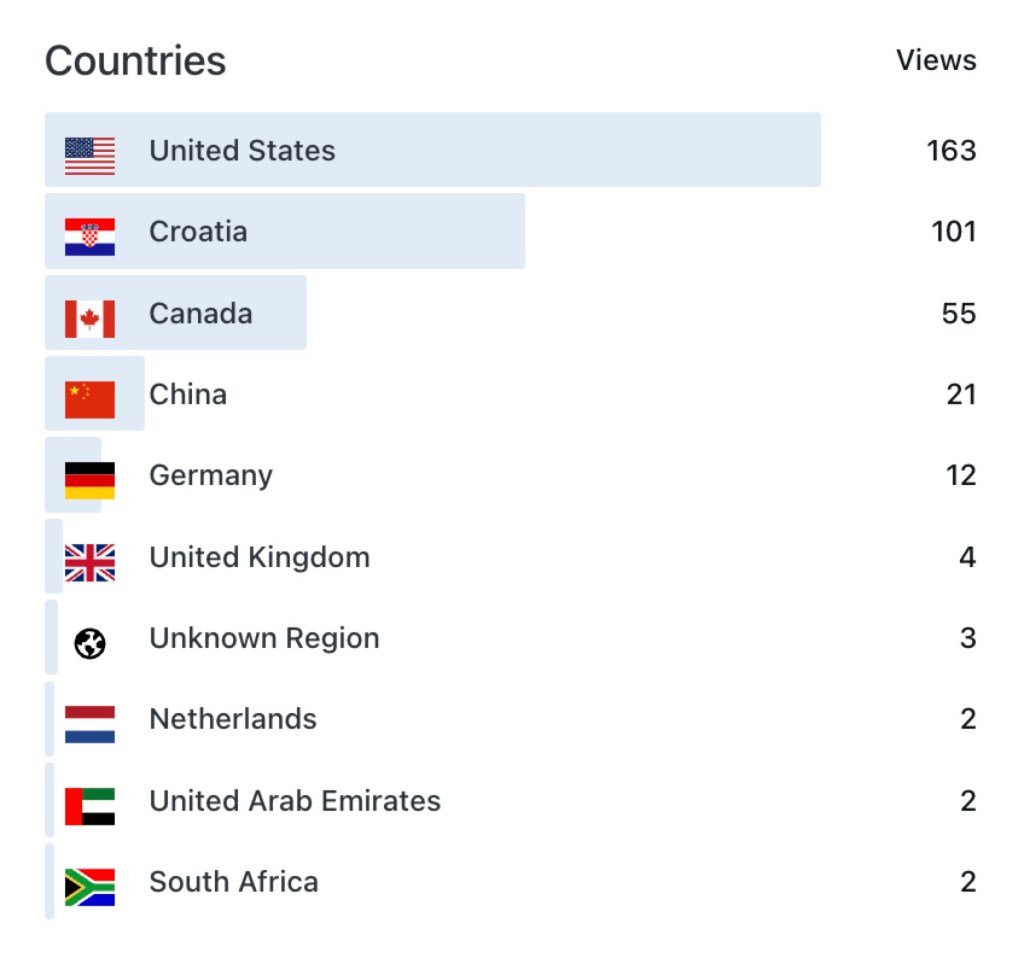
Popular countries—USA, Canada, and Croatia: Spanning continents, your site resonates with an international audience.
Ah, more resonance. But, again, it’s resonance of this kind. Break down the numbers and everything breaks down. Canada and Croatia are where most of my family live and Americans will click on almost anything to ensure that America is #1 at everything. Instead, I find it more interesting that my blog got hits from undoubtedly befuddled people from up to nine different countries (Germany might be all me), including the big three above, all begging the question as to how they landed there in the first place.
Traffic source—facebook.com: facebook.com has been a major contributor to your site’s traffic, a nod to our targeted SEO and marketing efforts.
Oh. That’s how …
Thank God for Facebook and its whopping seven referrals. Major has never been so minor before. But, in the end, it does justify the millions that WordPress undoubtedly spent in its targeted marketing efforts just for my blog. (Just nod …)
99.999% uptime: Almost perfect! We’ve kept your site live and accessible for 525 595 minutes out of 525 600 this year.
The only decent number in the whole bunch (even if it has a ridiculously unnecessary number of digits behind the decimal point) and one that really has nothing whatsoever to do with my blog. Pity that those five minutes of downtime were probably exactly when everyone else was trying to call up the site.
Kinda all explains why WordPress isn’t telling me how much money I can make with my blog anymore, doesn’t it?
Recently, I wrote about how the University of Not-Bielefeld had set up a centralized system for registering when you were on sick leave (i.e., sick for more than three days in a row). The general idea was that instead of simply informing your boss about being sick, you filled in a form, sent it to a central e-mail address (sickleave@uni-not-bielefeld.de), AND informed your boss about it. Given central admin’s reputation for conceiving inefficient, barely thought-out solutions to non-existent problems, what could possibly go wrong, right?
Well, in the past few weeks, I too had the pleasure of using this system for the first time and was lightly admonished for not having included my status group (roughly civil servant, employee, admin, or student) in the subject line of the e-mail. The problem, you see, is that all these e-mails from all these different groups of people are sent to the same, single e-mail address to be handled separately by separate admin types for each separate status group. (Still with me?) By not also including information that is already present on the form itself, I was causing them extra work and therefore slowing the entire process down.
Not wanting to be too blunt about it, but who cares on either count?
They designed the system and my role in the the whole undertaking is to get better as quickly as possible, which, last time I checked, is almost certainly independent of the time it takes them to process my paperwork. Nevertheless, because I was still apparently suffering from some delirium, I actually wrote back apologizing that I didn’t know this because the form only says (without exclamation marks) to include the name of my department in the subject line and suggesting that maybe they could add these instructions for the future? (And God only knows how often central admin likes to amend each and every form here at the University.)
The answer, of course, was classic admin: there was no way that you could know this, but please do it in the future anyway.
Now, I’m no admin type, but, just off the top of my head, here are three possible solutions to this self-created “problem”:
change the form,
create separate e-mail addresses for each status group, or
train the staff there to enter what is presumably the same information into the same central database regardless of which status group the person belong to.
But no. Leave it to admin to choose possibly the least efficient of all solutions: inform each and every person in the University individually and retroactively about what they should have done and should do in the future.
And they’re worried about me slowing the entire process down?
The economic hardships following the collapse of the corona pandemic continue to hit Big Tech really hard. Latest news is that Spotify is laying off 17% of its staff to cut costs. Let’s crunch some numbers …
From June to September of this year, Spotify:
signed up 6 million new subscribers, 2 million more than they projected and
made a profit of 32 million EUR compared to a loss of 228 million EUR in the same time period in 2022.
Let me get this straight. Despite a 260 million EUR turnaround in the past year to enter the black, Spotify is shedding itself now of 1500 “smart, talented and hard-working people” in part because too many of its employees are “dedicated to support work rather than focused on delivering for content creators and consumers.” (Both are quotes from Spotify’s CEO, Daniel Ek.)
Hmm. A couple of points …
First off, I like the way CNN refers to it as “eking” out a profit of “just” 32 million EUR. Now when talking about that kind of money, the word “eking” simply doesn’t belong and the word “just” should only be used in the context of “just the kind of money I’d like to be making.”
Second, doesn’t “delivering” for content creator and consumers count as supporting them?
All seems a little tone deaf for a music-streaming company, doesn’t it?