
I was listening to the radio on my way to and from work the other day and was confronted with a news story so important that it was carried by at least two different stations at two different times. The story went something sort of like this …
The strongest lightning strike of the year so far in Germany was recorded in Schiffdorf, Lower Saxony with a measured force of 336 000 amperes. In total, Germany has experienced just over a million lightning strikes in 2026, with the most occurring in Bavaria and then in Lower Saxony.
… and immediately raised three important questions:
- Who cares?
I know that a lot of people dislike the news nowadays because of all the negative stories but is this really the best they could do to even that out? Really? What can I possibly do with this information other than to bore the shit out of my friends even more than I already do?
- Context?
Ok, three hundred thousand and change is unquestionably a big number. Same as with the million lightning strikes in Germany so far this year. Unfortunately, news organizations are usually satisfied with simply rolling out big numbers even when they alone don’t even come close to telling the full story. Simple question: is 300 000 amps a lot when it comes to lightning?
Going online gave a bit more context where the complete news release revealed that 300 000 amps is roughly 16 000x what comes out of a normal German electrical socket. Slightly smaller big number but again still relatively meaningless. We all know that lightning packs a lot more oomph than what our TV needs, but how does this particular strike compare to other ones?
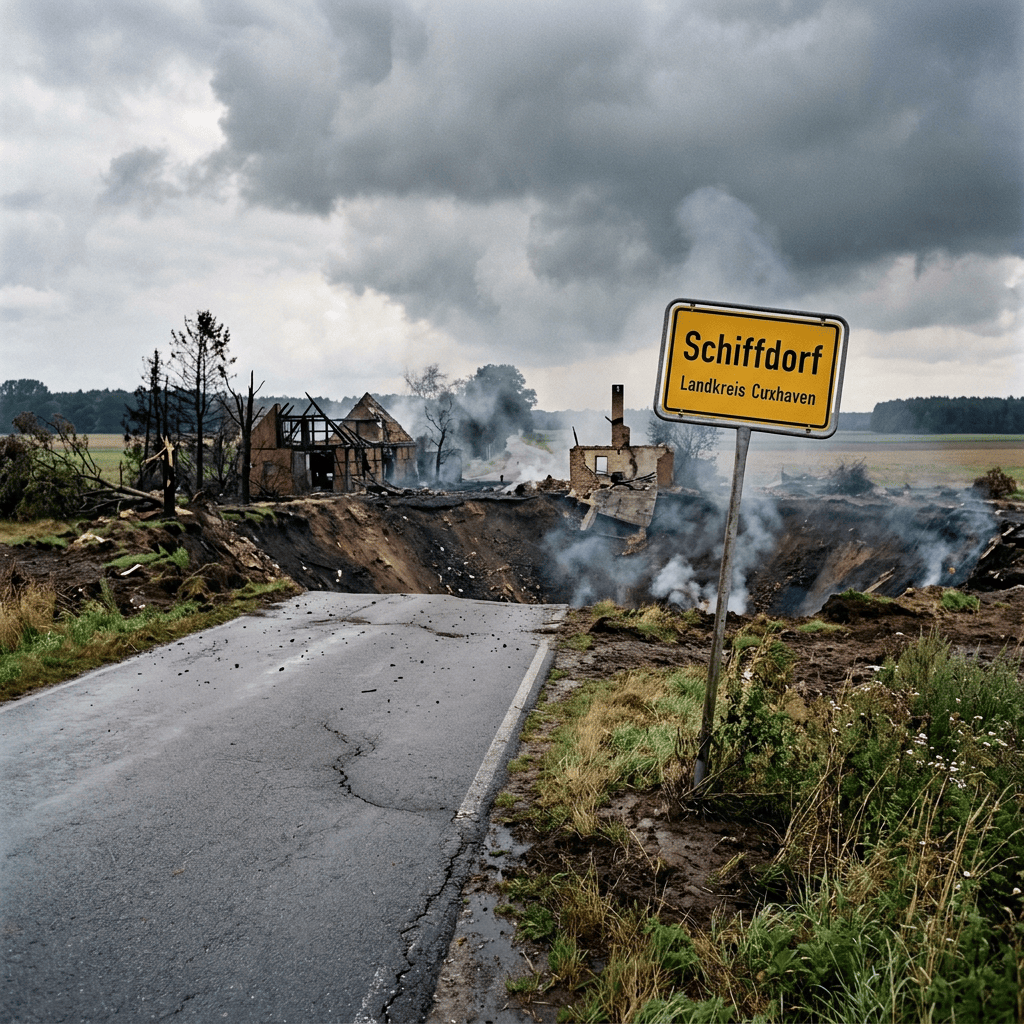
Pretty good as it turns out, with ChatGPT indicating that the average lightning strike has about only 30 000 amps, making this one an order of magnitude stronger than that. Even more impressive is that the magnitude of this strike was close to the apparent theoretical upper limit for lightning in temperate regions. So, as big as the number 300 000 by itself is, just this little bit of extra information makes it that much bigger. Makes me wonder if Schiffdorf still exists. Or, in the context of my first question, if anyone really cares if it does.
(And for those who are interested, the same online story indicates that the million strikes are actually 15% below the 10-year rolling average for Germany. Granted, more context, but badly used context because they forgot the words “so far” and a relatively normal October, essentially the last month in the annual lightning season, would result in 2026 becoming a pretty average year in terms of lightning.)
- More context?
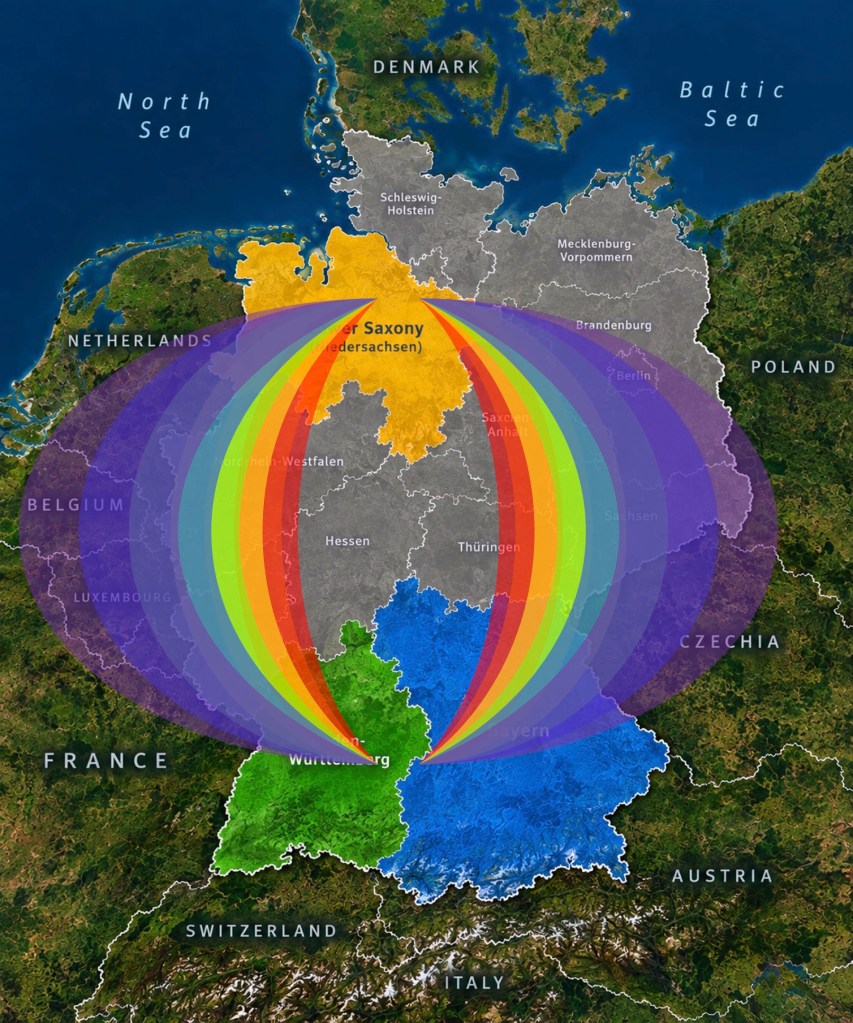
From both the radio and online stories, you would get the feeling that Bavaria and Lower Saxony are particularly prone to lightning, with Baden-Württemberg rounding out the top three. When you consider that Lower Saxony is in the far north of Germany whereas the other two provinces are in the deep south, you might think that this distribution could be caused by something akin to the Earth’s magnetic poles, with Germany acting as some kind of bipolar battery.
Now, Germany might indeed be bipolar, but the real answer could be much more banal: Bavaria, Lower Saxony, and Baden-Württemberg just happen to be the three largest provinces by area. In other words, you would expect them to get more lightning strikes just because of that, all other things being equal. And, indeed, the correlation between lightning strikes and land area for these three provinces, unlike lightning, is amazingly damn straight.
Welcome to bonehead (news) coverage of the day …

