I know that I’ve been picking on the environmental efforts of the University of Not-Bielefeld quite a bit lately, but, unlike Central Admin, they’ve been relatively productive of late. Well, productive in terms of generating content for this blog at least.
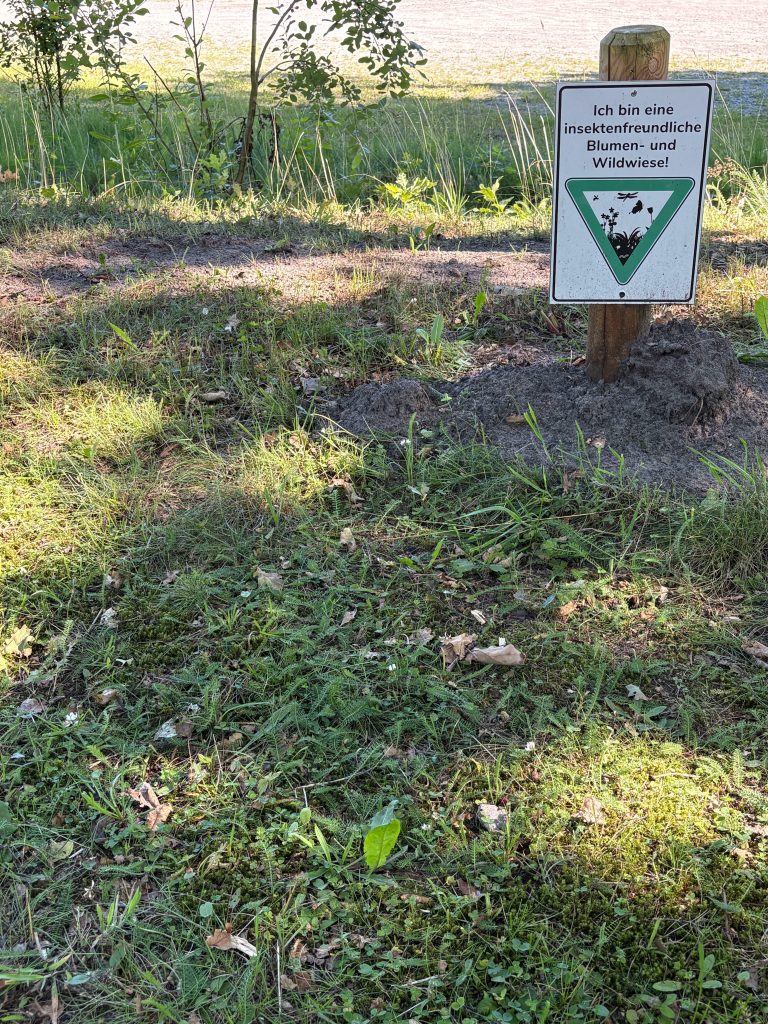
I’ve poked fun at the exact same sign to the right before, pointing out that, among other things, a two-meter wide strip of grass beside a parking lot hardly qualifies as a meadow. But now thanks to some bored University gardeners and their weed-whackers, it doesn’t even qualify as insect-friendly (insektenfreundlich) anymore, much less as a flower meadow (Blumenwiese). I mean seriously. Exactly what kind of insects are they possibly trying to befriend here? Ants? Even ticks will be giving a very hard pass to this very literal brush cut.
Now I don’t really have anything against ants and it’s not as if there aren’t any other bushes or flowers or other wild growth on campus. But why on earth do you explicitly designate a “meadow” as being for insects and then raze it to the ground at the very height of summer? The gardeners have even simply thrown the signs to wallow neglected at the edges of some other meadows, probably because they were getting in the way of the lawnmowers. Remember, this all is basically being overseen by the same people who made a lot of noise about replacing a simple dog meadow on campus with an “ecologically enhanced” Tiny Forest. Well, that dog meadow is looking pretty good in comparison now, isn’t it?
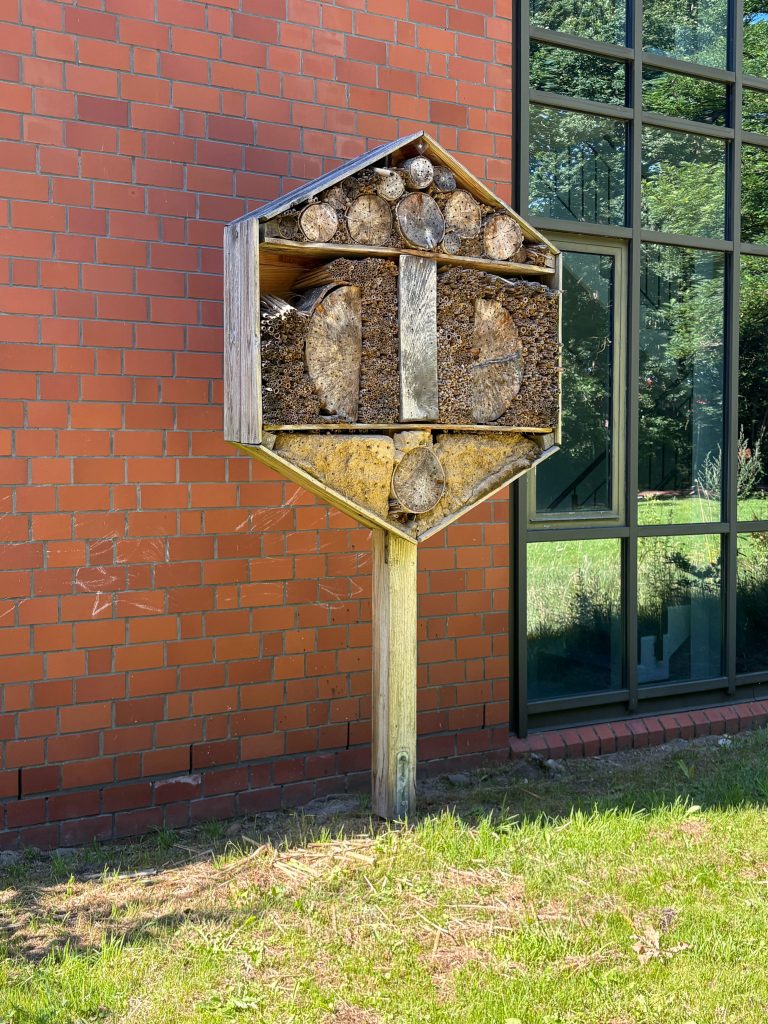
But, even if the potential lack of flowers is creating workplace issues in the local bee population, at least the University of Not-Bielefeld had the foresight to provide housing for these unemployed creatures in the form of bee hotels. Only thing is, no one told the University that the annual upkeep of these hotels is just as important as the opening of their doors. As the photo obviously shows, much of the wood has dried out and shrunk dramatically since this particular hotel opened only a few years ago, leaving lots of gaps and even some huge voids where some of the rooms have fallen to the ground to the left.
Again, it’s not as if this hotel has closed its doors entirely and there are still lots of suites available. But, like so many other of the University’s actions in this area, the focus seems to be more in generating headlines than in actually throwing lifelines. Or just checking off items on some list to be able to say “mission accomplished” five years down the road. In talking about environmental sustainability, shouldn’t sustainability also apply to the projects themselves?
A case in point is the 2026 priority list for the University’s Climate Inaction Fund as decided upon by the “Wi$h List” workshop. (Seriously? C’mon. Who thinks this stuff up and, more importantly, still thinks that it’s clever? And does everything have to have some catchy label nowadays?) Now there are indeed some good things on the list like planting new trees or installing nesting boxes on the campus. But way down at number six on the list (or four places behind yet another education programme on sustainability for university employees), and subject to any funds still being available, was “visibility of repair services”.
Now, to be honest, I have absolutely no idea what that last goal really means. But, taken literally, it does put much more emphasis on simply promoting any repairs instead of actually doing them …

