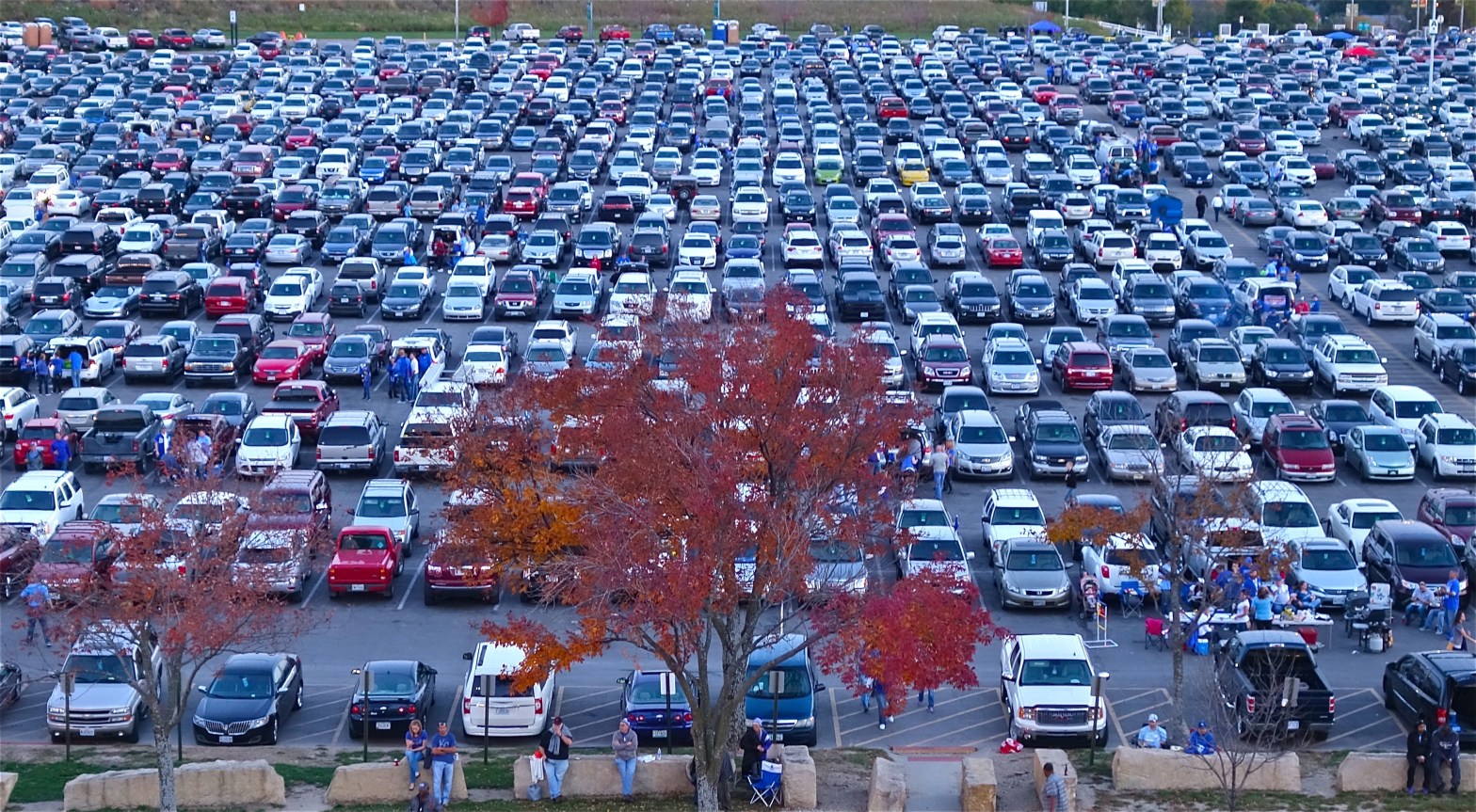
It simply wouldn’t be the University of Not-Bielefeld if there wasn’t another upcoming open forum to further discuss the University’s long-planned “parking space management system”. It’s been more than four years since the University kickstarted its much ballyhooed Environmental Upheaval Plan and what should be a slam-dunk decision to help increase sustainability has turned into a literal no brainer.
The latest e-mail invitation from the President’s Office confirms what I have long suspected: the endless discussion on this topic comes from there apparently being severe pushback from the university community against paying for parking on campus. Now, coming from North America, it never even crossed my mind that there could be such a thing as free parking on campus. Or even that those particular words could appear in that particular order without being preceded by the word “no” or followed by the word “hahahaha”.
And God forbid that I actually attend that meeting to find out firsthand, but you really have to wonder what yet another open forum will bring to the table. The University wants paid parking, the university community doesn’t. Hard to find much wiggle room there. More to the point, when did going green suddenly become so democratic? I don’t recall the University asking for our opinions before they unilaterally imposed their sustainable travel policy for business trips on the community, something costing us either time or money. (But still not really generating a lot of the latter. For all the increased admin the new policy created, its associated climate fund raised just under 35 000 EUR for all of 2025, half of which was a matching amount from the University. This all amounts to less than 0.02% of the University’s annual budget or, when converted into direct environmental benefits, room for four more bikes on campus.)
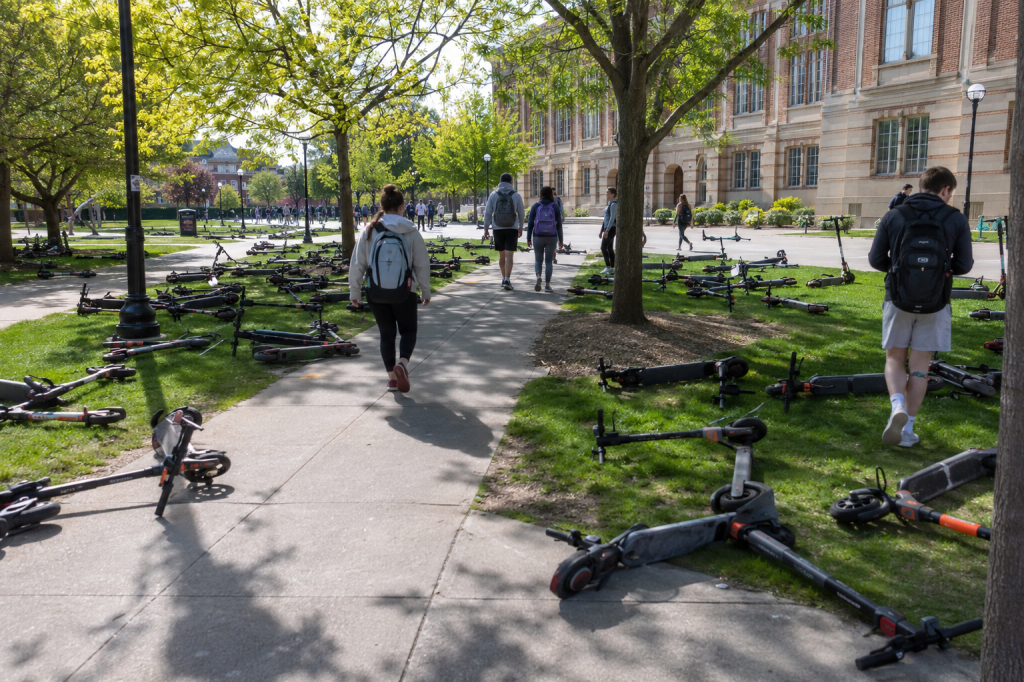
Of course, there could be a lot more nuance to this entire, endless discussion than I am giving everyone credit for. Perhaps all the talking revolves around whether or not electric cars should be liable to the same parking rates as their gas-guzzling cousins. Or to any whatsoever. This would certainly fit in with the University’s positive attitude regarding e-scooters, with the initial version of the Upheaval Plan foreseeing specialized parking areas for them to prevent them from polluting all the sidewalks on campus. (Sadly, however, foreseeing is something completely different than actually building.)
And, if this nuance is not what’s holding everything up, then I’d be very happy to inject it into the conversation to help move things along …
(At the very least, this would be much more productive than one of the official statements from the University—and I am not making this up—that parking fees, should they be introduced, would likely be of an amount that minimally pays for setting up the entire system as well as covering its day-to-day running costs thereafter. First off, well duh. And, second, doesn’t breaking even pretty much describe what we have right now with free parking?)
Now, for the purposes of disclosure, I must admit to being one of the many here at the University who drives to work each day. And this despite the measly three-kilometer commute. My excuse, however, is my dog. Up until about a year ago, we routinely walked back and forth but time has finally gotten the best of her and at 16 she no longer has all those miles in her. At least sadly not in one go. At the time, and especially in hindsight, those two hours of daily commuting were by far the best parts of my day. It was just the two of us and with all the time in the world to stop and smell the roses along the way. (And the lampposts, and the fences, and that particular blade of grass, and …) It also let me rather smugly avoid taking part in University initiatives like “Bicycle-Commuting Month” because of the increased damage to the environment that I would be causing.
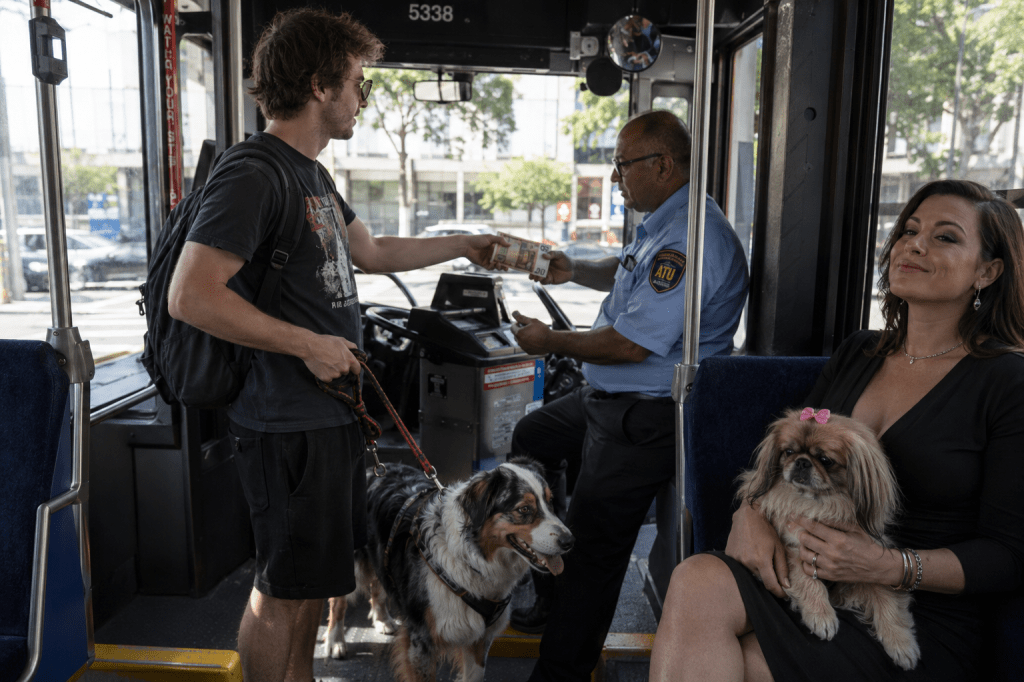
A big part of my decision to now drive to work revolves around the lack of other reasonable options. According to the German automobile club, the ADAC, my car has running costs of about 55 cents a kilometer. (And this estimate includes the currently overinflated gasoline prices deriving from some senseless war in the Persian Gulf.) , This translates to about 3.30 EUR per day or 60 EUR and change per month assuming that there are 220 workdays in a year and I’m at work for all of them. By contrast, bus tickets would set me back nine Euros a day because my dog is too big to count as “luggage” and so requires an extra children’s ticket. (But, despite having her ticket, she still has to remain on the floor, whereas the smaller, “luggage” dogs can be on the seats in their carriers or on their owner’s laps.) There are monthly “job tickets” available, but they cost about 47 EUR and that would just be for me. Even me as a biologist can work out the sums here.
Admittedly, I could bike to work but I have no real possibility to park the required doggie carrier in my apartment building. And leaving my dog at home is about as attractive of an option for me as pulling teeth. Without anaesthetic. By someone from admin.
In the end, what’s striking about all this is how promoting sustainability (or many other activities) usually occurs more through punishing our undesirable behaviour rather than actually directly rewarding what they want us to be doing. For instance, instead of making public transport absolutely more affordable, the chosen solution is to make it the lesser of two budgetary evils by increasing the costs associated with driving. It must be said, however, provincial law is apparently preventing the University of Not-Bielefeld from subsidizing public-transportation costs for its employees.
But then how difficult could it possibly be for the University to lobby the provincial government to allow for something like this? And a provincial government that has included the Green Party for about as long as the University of Not-Bielefeld has had its Upheaval Plan.

