
Another lesson in admin logic that my father reminded me about, this time a transcontinental one …
Although I always claim to be Canadian, that’s really only true culturally, if it can be said that there really is such a thing as a cultural Canadian. (Molsons, hockey, and poutine does not a culture make. Just a perfect, wintery Saturday evening.) Genetically, I’m actually 100% German and both my parents emigrated to Canada from Germany in the early 1960s. (In hindsight, it makes me wish that I’d listened to them more as a kid because then my German would be miles better than it is now. But then, who would have ever suspected then that I’d reverse-emigrate back to Germany?)
Why is all this important, apart from being a nice excuse for one of my digressions?
Well …
Because my parents were in their mid-20s when they emigrated, they’d already worked a bit here in Germany and so contributed to their pensions. Not for long and not for much, but still something that’s added up over the years “thanks to the Miracle of Compound Interest”. My parents have long since retired and so are also reaping the riches of their German pensions in Canada. And here starts the story.
You’re probably thinking at this point that all the silliness to come derives from the complicated logistics: two countries, two continents, two currencies, two tax systems, two languages, two whatevers, …. Well, you’d be half right. The logistics are “complicated”, but the lunacy is all Made in Germany.
After drawing their German pensions for some years, my parents started getting demands from the German tax office for the income tax due on those pensions. (How you can possibly be expected to pay income tax on an amount that barely buys you a cup of coffee is anyone’s guess, but the Germany’s version of the IRS apparently is very good at guessing.) And here the transcontinental logistics do come into play a little bit: how do you pay a German tax bill from Canada?

The banks, of course, offer numerous convenient options for this, if only convenient for their bottom lines. A bank-to-bank transfer is the most direct obvious route, but it involves two sets of service charges in addition to the usual shitty exchange rates. The Canadian bank takes their cut for setting up the transfer and the German bank naturally takes theirs for receiving the money. Say what? Since when does simply accepting money count as a “service”? (If you’re bored and not easily offended, google “George Carlin” and “service the account”. Same idea.) In the old days, say pre-Y2K, you could sort of understand this, at least on the side of the bank sending the money because there was a bit of work involved to it. But now with it all being electronic and automatic and even more impersonal than the banks ever were?
Cue option #2: the international money order. Only one set of service charges this time around to compensate for the difficulty in printing out that piece of paper. (The usual shitty exchange rate doesn’t cover those exorbitant costs, you see.) Or so you’d think. Even though the money order was in Euros and drawn from a German bank, my parents still got another bill from the tax office for the service charges they incurred in trying to cash something that essentially is cash. Comes the dilemma: how do you transcontinentally pay a bill for the service charges involved in paying a bill? Another international money order? Sorry, no. That’s one step toward a perpetual motion machine and so fundamentally outlawed by the laws of the universe (even if it fits perfectly within the rules of bureaucracy). The solution, of course, was to tap the son living in Germany to transfer the necessary amount of money in Euros drawn from a German bank. Sounds hideously familiar with the exception of the service charges.
It gets better of course. (Better only in the context of this blog. Objectively worse in the context of humanity unfortunately.)
Perhaps to build up the sense of anticipation, the German tax office only did their assessments on my parents in three-year batches. So their tax demand for the previous year was bundled with those for the two years preceding it. Buy one, get two free as it were. Except there was nothing free about it because the total demand also included the interest that was owing on the first two years because the payments were late. My parents actually went to the trouble of phoning the person in charge of their case to point out that it’s kind of difficult to be late with a payment that you’re not informed about. A pretty logical argument when you think about it. But even bombproof, Aristotle-approved logical arguments are no match for Bureaucracy Counterargument #1: those are the rules. (Rules, while not mutually exclusive from logic, are often a couple of doors down from it and typically used in place of real arguments.) The feeble ray of light at the end of the tunnel, however, was that they could formally appeal the interest charges. Which they did.
To cut a long story short, the appeal went to the person’s immediate supervisor who, true to their adjective, immediately turned it down (cf. German efficiency).
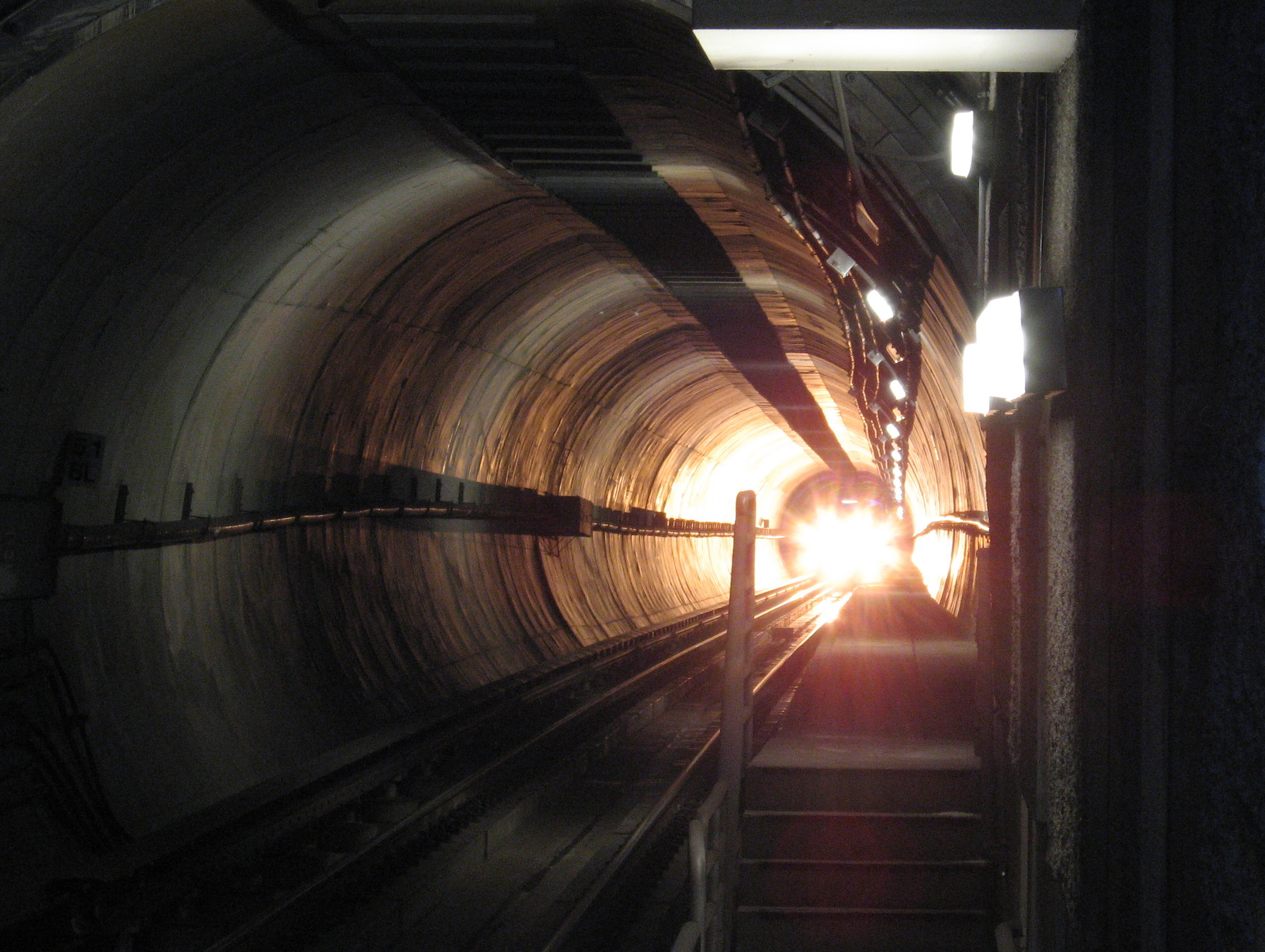
So, once again, any ray of light was merely the headlight of an oncoming paper train …
Perhaps the obvious question in hindsight is why all this is even necessary. Why doesn’t the German tax office simply deduct the taxes from the pension before it gets paid out? They do manage this complicated trick with salaries after all. The question was indeed so obvious that my parents did ask it. The not-so-obvious answer was simply that it’s Not Possible because the tax office and the pension department are two separate departments, silly.
In the end, my parents are being punished, financially if not psychologically, for being honest. The tax demands are usually politely phrased along the lines of “Please pay this OR ELSE.” Another German acquaintance in Canada facing pretty much the same situation simply wrote back saying that they’d take “or else”. Since the tax department knows about the money, they can simply take it from there or take steps to withhold the pension or whatever. The acquaintance didn’t really need the peanuts anyway and wasn’t much of a coffee drinker either. Or else turned out to be nothing at all. Because of the two separate departments and the two separate continents, the pensions kept coming untaxed, the tax demands kept coming unanswered, and everyone seemed ok with that.
Just gotta love those happy endings …

 The Blog About Fog
you lead (and your parents) a complicated life, but I love reading about it. Keep up sharing your frustrations.
LikeLike
Thanks a bunch! There’s still another six in the pipeline so enjoy …
LikeLike
meant to say “love reading”
LikeLike