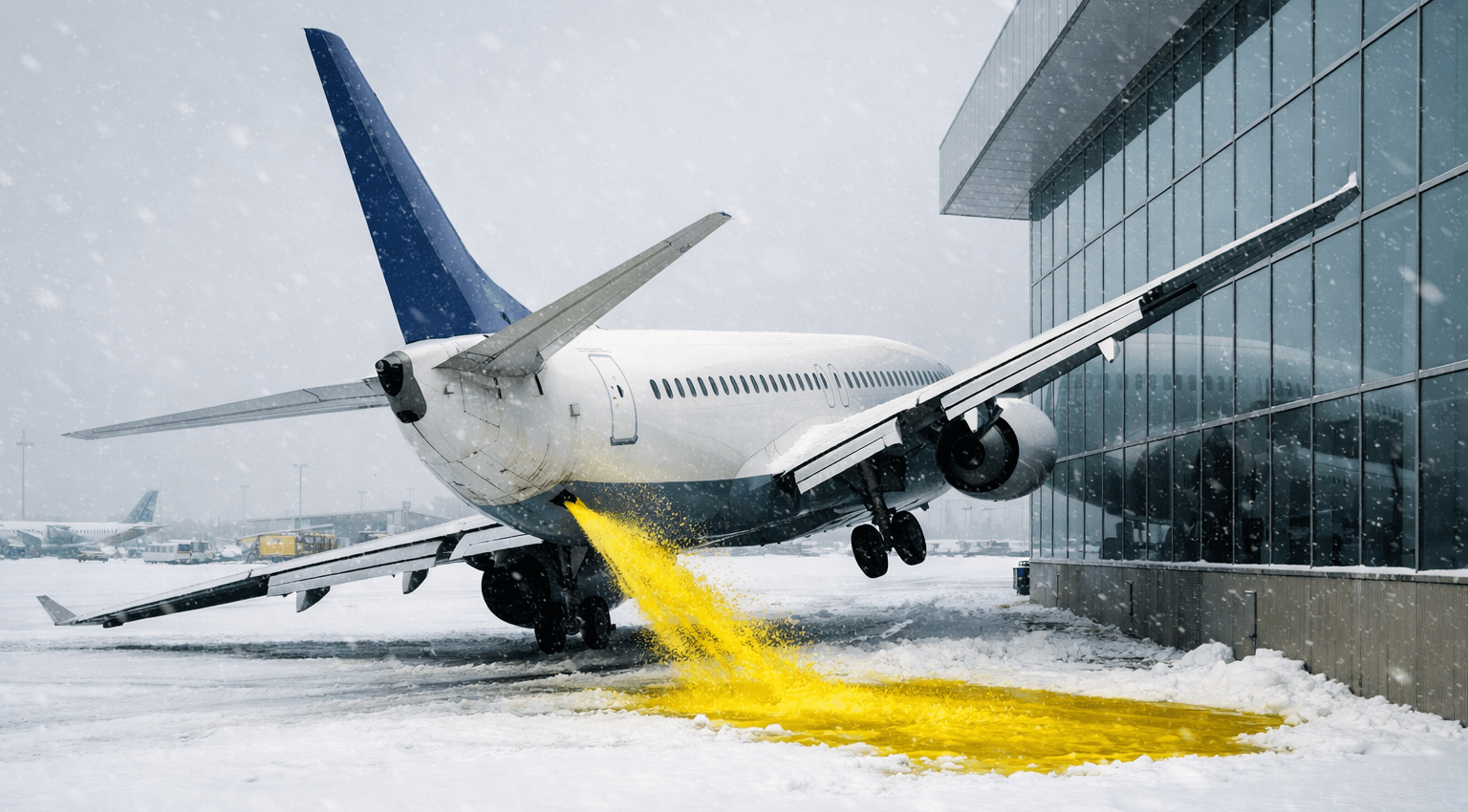
For most of January, Not-Bielefeld and the rest of northern Germany were laid to waste by an extreme and extremely rare weather anomaly known throughout the rest of the world as winter. It was chaos. Planes and trains strayed rarely from the plains. Road salt was as hard to get as the real stuff was historically. People were cold.
And all the suffering was to a large extent so unjustified …
Ok, I hear what you’re thinking: the ex-pat Canadian could cut the northern Germans a little bit of slack here. After all, they aren’t used to snow and cold like you are, right?
Wrong. Just take a look at our neighbours to the west, the Dutch. Although they are more famous for other things, many people might be surprised to learn that they are world-class speed skaters. And historically so, long before they had things like indoor speed-skating ovals. (Which, for the record, only date to 1986. And given that you can comfortably fit two ice-hockey rinks inside a long-track speed-skating oval, they simply don’t have enough room in Holland to build that many.) Instead, the canals in Holland used to regularly freeze solid in the first half of the 20th century, perfect for their 200-km long speed-skating race, the Elfstedentocht. Which makes it all somewhat surprising that Amsterdam’s Schiphol Airport was essentially out of commission during the first week of January because of a pair of winter storms, first Anna / Tizian and then with Goretti / Elli following closely thereafter before the winds really had any chance to die down.
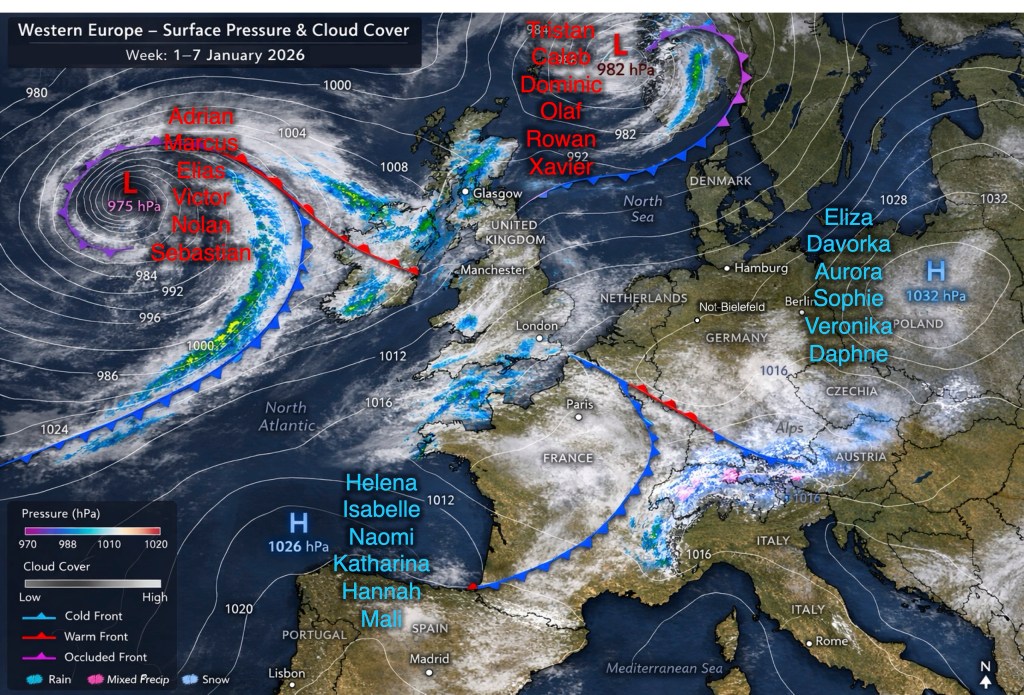
(The reason for the dual names is because Europe has six different naming systems for winter storms but no system for deciding which name gets priority for any given storm. Gotta hand it to the EU. For all the flack they’ve received for standardizing nearly everything, they can’t agree on what to call the wind. And, to make it even more bizarre, the names for the Central naming system that Germany belongs to are auctioned off—currently 390 or 290 EUR for a high- versus low-pressure system—by the rather inappropriately named Free University of Berlin through the Adopt-a-Vortex scheme to help fund their long-term meteorological observations.)
Now, I’m not necessarily intending to single out Schiphol here. An honourable mention also has to go to the German rail company Deutsche Bahn, a company and a train system that every country in the world (except Germany and possibly Japan and Switzerland as well) would love to have. Although Goretti / Elli also brought the train traffic to a complete standstill in northern Germany and for largely similar reasons, it’s just that I personally experienced the Schiphol shutdown and had to sleep in the airport for two nights en route back to Not-Bielefeld after spending Christmas in Canada.
Anna / Tizian literally crippled Schiphol, semi-officially causing about 60% of all flights to be cancelled outright. Again, I know because my connecting flight to Not-Bielefeld was among them. Twice. My own impression, however, was that the actual cancellation rate, at least for the departures, was way higher than this. 60% means that roughly every other flight was cancelled but you had to look really hard at the departure boards in Schiphol to find any flight that wasn’t. In fact, the only thing running at capacity at Schiphol while I was there were the airport hotels, which were booked solid every day sometime before I officially heard that my only flight option for that day was a no-go. In the end, after an ill-fated prison break to the Amsterdam’s central train station (see below), I finally managed to escape Schiphol for good by taking a 250 EUR Uber ride to Groningen where I then hopped on a Flix bus to Not-Bielefeld.
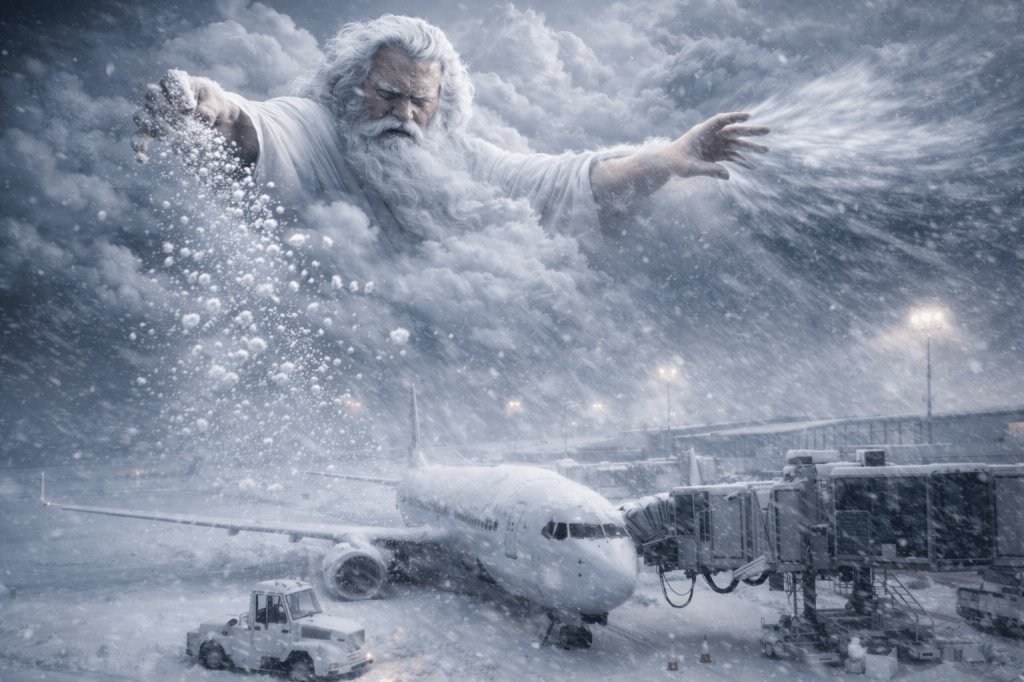
Schiphol, of course, denied any and all responsibility during the shutdown (“Act of God”) while simultaneously promoting their heroic efforts to help get us home (“working round the clock”) as quickly and as safely as possible (“because your safety is our first priority”). Pound for pound, however, these combined statements contain more shit than the waste-storage tanks of an intercontinental superjumbo overloaded with lactose- and gluten-intolerant passengers who were all mistakenly served cheese pizzas for dinner.
As I’ve mentioned before, invoking our safety is often merely a solid go-to excuse to justify just about anything. Like cutting expenses on safety, which is how much of the trouble began in the first place. How can we possibly complain when they’re looking out for us. (Or, more realistically, our lawyers with our lawsuits.)
As for working around the clock, the only airport employees I saw doing that were the staff at the all-night Starbucks that I was sleeping next to for two nights. The service desks? Completely unstaffed when we finally made it back to the main terminal building at 11 PM after my original flight was cancelled at the last second while we were actually in the plane. And equally empty the next morning at their official opening times of 7 AM. Instead, the agents only started arriving 15 minutes later and huddled in the office for another 15 minutes or so before finally facing the lineup of some 200-plus grumpy passengers. (Ok. Can’t say that I blame them there.)
And it took another 90 minutes—or more than two whole days after Schiphol began shutting down—for them to announce that people travelling to Belgium and northern Germany could / should get home using the trains instead because our boarding passes would be recognized as valid tickets for this. (But to be fair, there was that weekend in between. They might have been working around the clock but weekends? Pffft.) Unfortunately, this info was passed on only a mere hour before the entire Dutch train system also shut down nationwide because of the storm. All of which meant that I spent more than a few hours in Amsterdam’s unheated central train station wondering if I’d even be able to make it back to the comparatively comfy confines of Schiphol and possibly even my as-yet-not-cancelled afternoon flight back to Not-Bielefeld. Had they come up with this idea just a half hour sooner, my prison break might have succeeded.
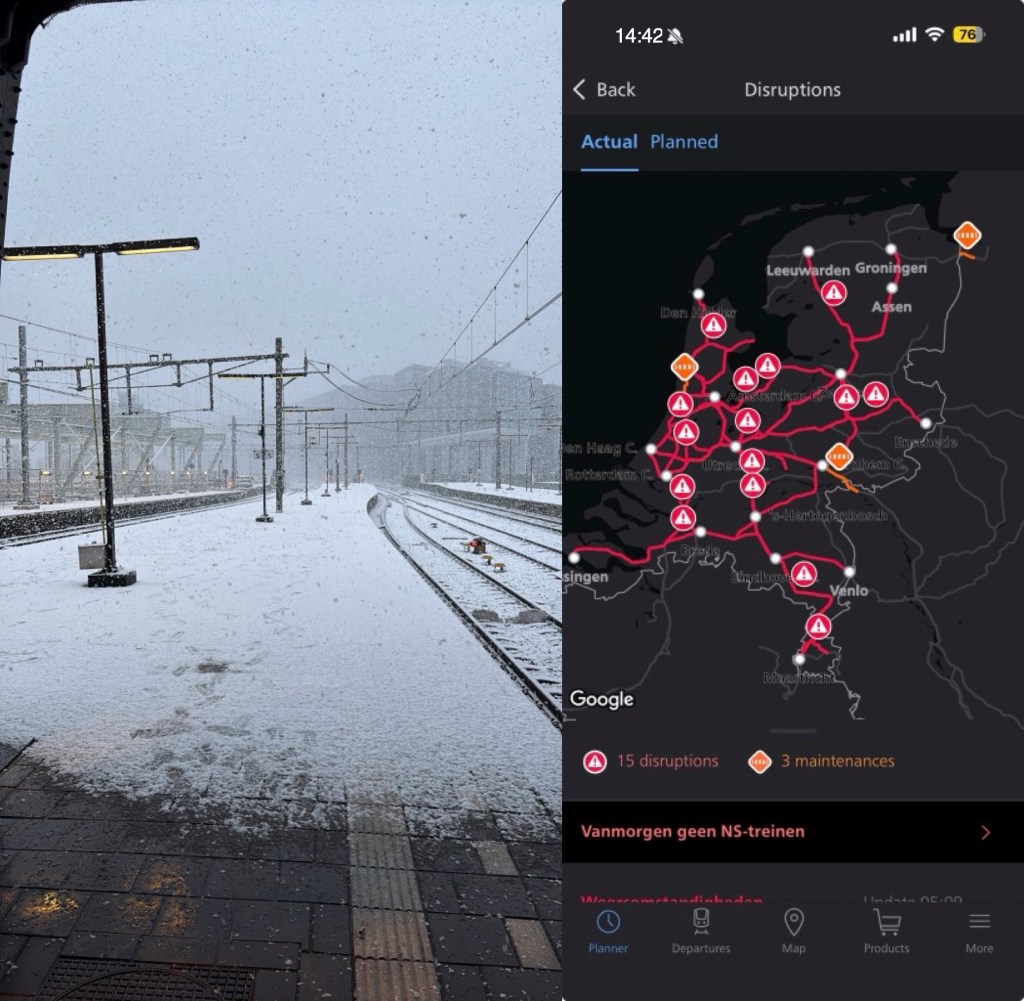
But, safety first, of course. It would have been foolish, if not actionable, to risk a train derailing from the literal meters of accumulated snow, thereby maiming if not outright killing hundreds of innocent people, right? For the record, however, the left-hand picture is one that I happened to snap just a few minutes before nothing went south anymore and sent to my wife with the comment “Pretty”. The right-hand one is how the Dutch rail network looked later that afternoon, all for an amount of snow that wouldn’t make the headlines even if it were seized in the States by ICE agents from all those Venezuelan narcoterrorists. Even the train personnel at the station were as baffled by the decision as anyone else.
That all being said, here are the bits that I really can’t figure out. By all accounts (including my own personal experience), Goretti / Elli was the more severe of the two storms for the Netherlands and northern Germany, yet it was her older sister Anna / Tizian that caused way more disruptions. In fact, on the day of my Uber-assisted escape from Schiphol, my afternoon flight actually took off and landed in Not-Bielefeld only a few hours after I did. And Schiphol also started returning to more-or-less normal service shortly thereafter too.
I also left Canada during a similar yellow snow advisory without any problems (except for that name: a yellow snow advisory?!) and there are lots of airports around the world that regularly see the kind of winter conditions that Schiphol experienced for that one week but continue operating normally. Even the airport in Not-Bielefeld only saw some small delays during the same timeframe. Sure, both of these airports are much smaller than Schiphol is, but if you want to be a world-class airport, it shouldn’t just count under mostly optimal conditions, right?
Finally, the whole of January was an unusually wintery month for northern Germany, with a lot more snow than normal piling up on top of the more usual high winds and occasional freezing rain. Nevertheless, it was really only that first weekend with Goretti / Elli that was problematic for Deutsche Bahn, which somehow otherwise seems to maintain regular train service throughout the winter in more snowy regions of Germany like Bavaria.
Instead, could it be that most of the chaos was linked less to God’s acting ability and more to the general inability of some other three-lettered supreme beings, namely some cost-cutting CEOs and especially CFOs somewhere? For instance, in preparing to hunker down for a second night at Schiphol, I proactively asked if it would be possible to get one of those crappy little blankets they give you on the plane. (Which are outdone in crappiness only by the pillows that come with them, BTW.) Nope, no chance: all the spare ones had been given out in the first days already. Umm, ok. Funny. Didn’t see any of those blankets anywhere in Schiphol and really sort of doubt that everyone took them home with them. And surely there might have been a few extra spare ones from all the planes that hadn’t been going anywhere for days at that point.
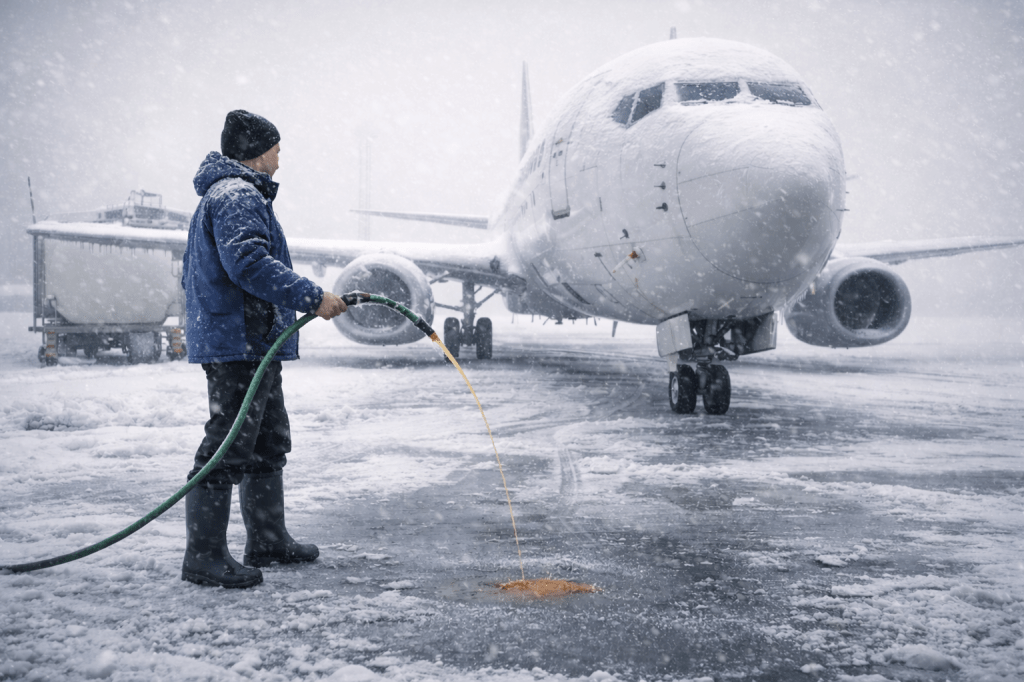
Moreover, the post hoc damage assessment indicated that Schiphol started running out of de-icing fluid on about January 6th and this despite the fact that most scheduled departures until then didn’t happen. No question, 85 000 liters of de-icing fluid a day is a lotta liquid, causing Schiphol to quickly use up its season’s supply in just a few days. But given that ChatGPT and Gemini (Google) both indicate that de-icing fluids have a shelf life of about two years or more, what’s to stop Schiphol from having two-season’s worth on hand at any one time in case of emergencies like this? (I mean, apart from the extra costs that they’ll pass down to us anyway?)
Even stranger was that the shortage was only for the fluid used to de-ice the planes. Apparently, Schiphol uses a different type of de-icing fluid for the runways and of which they still had “ample supplies” during the crisis. And don’t even get me started about how my original flight was cancelled with our butts in our seats because there were no pushbacks trucks available to get us to the de-icing station before Not-Bielefeld International Grassstrip closed for the night. You generally don’t need pushback trucks either for de-icing or for planes parked on the open apron as ours was. And how can some snow suddenly cause a shortage of these trucks, ones that are otherwise used all the time in good weather to push planes back from the gates?
But, wanna really go down the ol’ conspiracy-theory rabbithole?
The Schiphol employees most often singled out for working around the clock were the people working the snowplows and de-icing equipment. But this doesn’t make any sense because Schiphol has largely phased out the takeoff and landing of overnight flights (i.e., from midnight to 6 AM) and de-icing a plane is only good for about 30 minutes (= the holdover time). So why bother continually de-icing planes every half hour and clearing runways when nothing is allowed to take off in the first place? The answer is because there are two main types of air traffic. Everything that I’ve said up to now revolves around passenger flights, which is what we normally default to in our thinking. Now, although passenger flights can’t use Schiphol in the wee hours anymore, cargo traffic sure can. And, like with most airports, do. And, even more importantly, did. So perhaps it’s not too surprising to learn that whereas passenger flights were down by 60% (or more) during the shutdown, overall cargo capacity was only knocked back about 14% during the same timeframe. Just saying …
Look, I’m not unsympathetic about all this. With the first snowfall of the season, Canadians regularly smash their cars into everything imaginable until they get used to winter driving again after a few days. Humans will be humans. But Schiphol should just admit that they were too cheap to buy a belt and got caught with their pants down instead of trying to feed us some BS stories about God, heroics, and safety. The actual food we get to eat on the plane is bad enough already.
And if Schiphol wants to gamble that this won’t happen again in the foreseeable future and so not undertake the necessary changes proactively, then that’s fine too. But they should be prepared to pay out compensation with the money they’re saving now (as well as earning from their overpriced everything) instead of shirking responsibility by evoking the apocalypse when it does happen again.
 The Blog About Fog