World Mental Health Day is on the horizon (October 10th), something that, quite frankly, is stressing me out a little. Not the day itself, of course, just the attempts of the University of Not-Bielefeld to capitalize on it.
The background to this is a survey that the University recently conducted asking how its employees evaluated their own working situation. About 50% of the employees filled out the survey and the University got generally good marks across the board. The notable exception was that about 50% of the respondents indicated that work left them so emotionally drained that it was difficult to wind down afterwards. (Their words, not mine.)
Time to act and the University sprang into action, sending around an e-mail this past week that started with the following sentence:
“Leveraging its solid expertise, the University of Not-Bielefeld is committed to creating healthy working conditions for its employees by providing a wide range of heath-related classes.”
Vice President for Administration and Finance, University of Not-Bielefeld

One sentence in and I’m already cringing …
Actually, make that one word in. I simply have come to hate the word “leveraging”, which is an important-sounding but nevertheless meaningless, go-to word for PR people that don’t know what else to write. Poor Archimedes. He might have been right about being able to move the world given a long enough lever, but I bet he never foresaw also being able to bury it in bullshit given a big enough shovel.
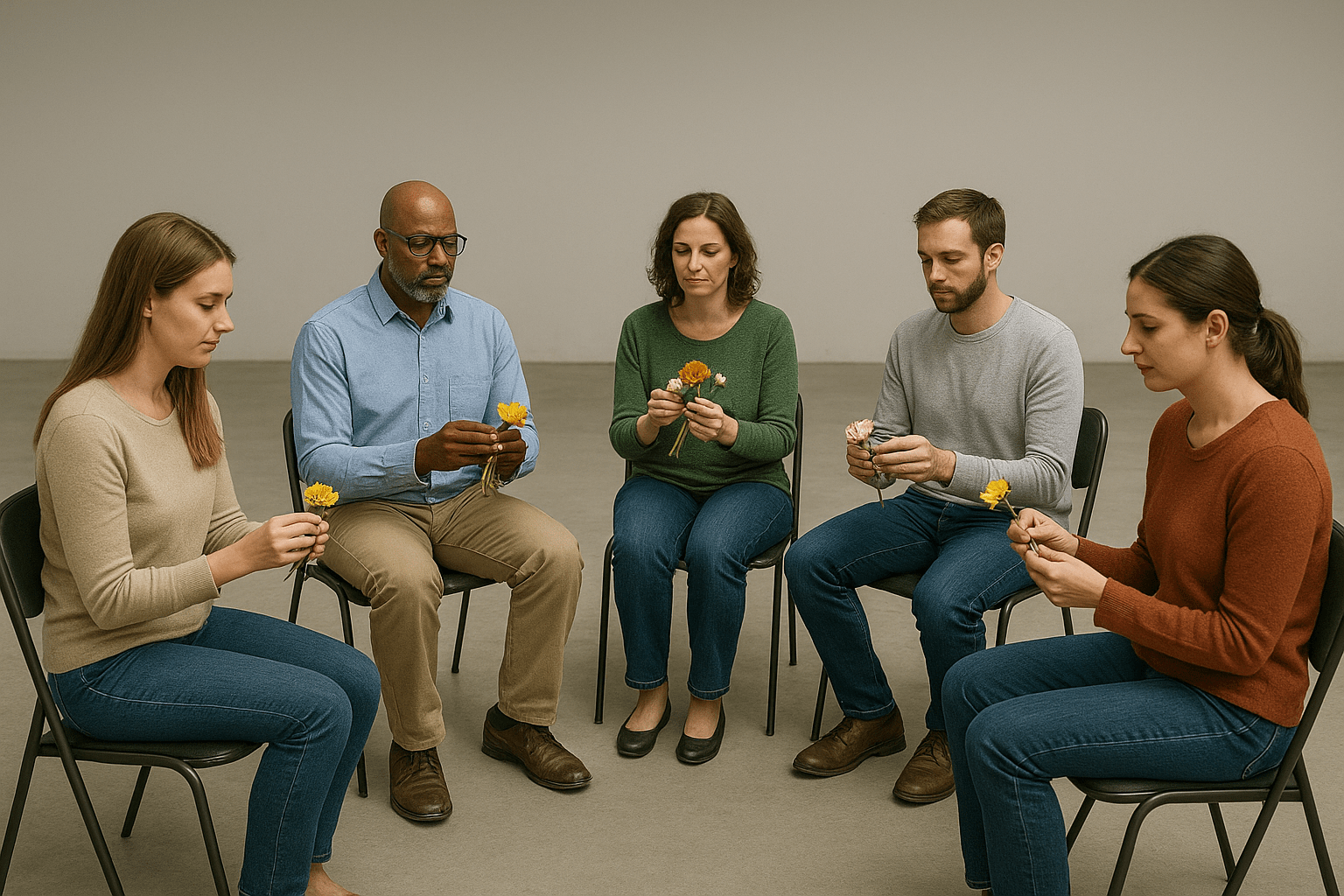
Look at that quote closely to single out the doublespeak. How exactly does offering classes create a healthy work environment on the part of the University? At best, it only changes how the employees react to the shitty one on offer. And, in this case, those classes amounted to goal-directed, mental-health workshops to coincide with World Mental Health Day.
Workshops, of course, are the perfect pendant to leveraging: an important-sounding but nevertheless meaningless, go-to solution for management who don’t know what else to do. They make it sound like the organization is doing something proactive for its workers but in reality lets it largely maintain the status quo while shoving the responsibility for any problem onto the implied self-deficiencies of its workforce. In saying all this, I fully admit that this is a two-way street. Employees have to accept that there can be highly stressful periods in their jobs and have to be able to deal with them. But employers also have to ensure that these stressful times remain periods and not an unbroken line of ellipses.
In any case, let’s break these workshops down a little bit …
Of the 10 on offer, two of them provide pupillography examinations (a technique so obscure that even Wikipedia hasn’t heard of it) and another two electromyography measurements. Or, in other words, four workshops that don’t have anything to do with improving the workspace at all but merely ascertaining how much stress it’s currently causing for a select number of employees.
On top of that, all but one of the workshops are being farmed out to people outside of the University of Not-Bielefeld. And even that one exception is dubious because the person running that workshop is actually officially associated with the Student’s Union, which, although affiliated with the University, is not officially part of it and also serves other universities in the area. So much for the “solid expertise” on the part of the University, although, to be fair, they never actually mentioned what that expertise was in. At all. The phrase was just thrown out there with even less meaning and a hint more pretentiousness than “leveraging”.

Finally, despite everything revolving around mental health, none of the remaining six workshops are being led by trained psychologists or therapists but instead by professional coaches. Admittedly, those coaches could indeed have some training in those areas but they don’t have to because, curiously enough, except if it’s in the context of sports, coaching is one of the few professions in Germany where no professional training or certification whatsoever is required. Selling books in a bookstore? A three-year apprenticeship. Becoming a therapy dog? Three to six months of training plus an exam for the certification. (All of which means that therapy dogs are officially more qualified to deal with mental-health issues than any coach is.) Aren’t skilled enough to hold down a real job? Just declare yourself to be a life coach and join one of the few parts of the work sector I know of that outperforms German civil servants in terms of salary but underperforms them in terms of value to society.

Ok, probably a little harsh on my side. I’ve gone to any number of doctors where I could only wonder how they ever got their qualification. But then, every coaching session I’ve ever been to has left me wondering if the coaches had any qualification whatsoever beyond being able to point out the obvious. Now there’s nothing really wrong with reminding someone about the obvious in those times when it gets forgotten. However, most people will gladly do this simply to enjoy the look of embarrassment on the other person’s face instead of charging them at least 100 EUR an hour for the pleasure.
A personal example here speaks volumes. A few years ago I was feeling particularly stressed by work and proactively made use of the counselling service offered by the University of Not-Bielefeld to find a potential solution. After two hourlong sessions with one of the head coaches, it was recommended to me that I needed to delegate more of my responsibilities. Again, the obvious, although this suggestion would indeed create a healthier work environment for me, albeit by making someone else’s that little bit less so. However, it simply wasn’t practical, with anyone that I could delegate work to being just overworked as I was. And pointing this little fact out immediately got me chastised as being “overly confrontational” and “not open to help when it’s offered”.
In summing up, two last details are necessary to point out. First, this is the same office that is organizing the upcoming workshops. That’s scary enough on its own. But, second, the results of that survey have been known since June of 2024 and it is now September of 2025, meaning that it took them well over a year to put something (embarrassing) together to address a pressing need (remember, we’re talking about mental-health issues that are negatively affecting about half of the University’s employees) that would’ve taken anyone else a couple of weeks at most.
But, then, we wouldn’t want to cause those coaches to have any stress in their work, now would we?
 The Blog About Fog