
I’ve been living in the internet Stone Age for some time now, having never gotten around to upgrading my 16 MBits/s DSL hookup. (If you want to know how slow that is, put it this way: I can type these blogs faster than I can upload them to the web.) A lot of people today probably won’t believe this, but you can actually make do with a connection like this so long as you’re not uploading a bunch of stuff all the time or can somehow find inner peace with anything less than zoom chats in Ultra HD. (And have broadband at work.) The real problem is the price. Despite being the slowest connection on the market, 16 Mbits/s is proportionately the most expensive. By far. In fact, it’s the only connection speed where you pay more in EUR/month than you get Mbit/s in return for.
Unfortunately, my options for upgrading to even the Bronze Age aren’t great. According to the people managing my building, the Deutsche Telekom, in the spirit of free enterprise, apparently limits other providers to using a maximum of 16 MBits/s of its phone lines in my building. Furthermore, the promised land of fibre-optic technology is matched only by how fast the many promised deadlines for its installation have come and gone over the past couple of years. So, if I don’t want to pay monopoly tariffs on a faster DSL line, that leaves cable, which promises fibre-optic-like speeds but with already existing infrastructure.
Tired of paying too much for too little (another canon in the spirit of free enterprise), I decided to take the plunge two weeks ago and go for a 100 MBit/s connection. Might as well get some bits for the buck: 6x the speed at 1.3x the cost. The installation was pretty simple but came with this all-important but nevertheless extremely bizarre warning about avoiding possible sources of interference:
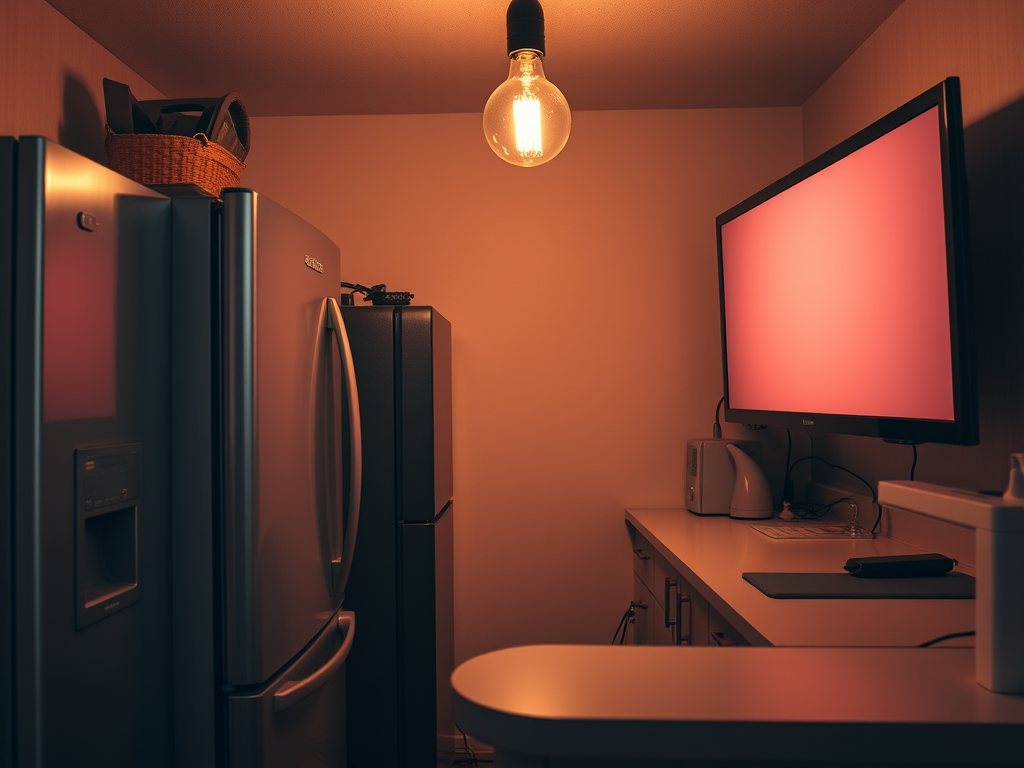
“Do not place your cable modem next to a baby monitor or large metal objects like refrigerator or flatscreen TV.” (Translated from the original German, obviously.)
For starters, metal? Is there anything really made out of metal anymore? I don’t think that my car even counts as a large metal object anymore.
More seriously though, the question of where I can put the modem is determined primarily by where the cable outlets in my apartment are located. This isn’t North America where there’s one in every room and there definitely isn’t one in the kitchen so that I can cook along with the Food Network. I’m also past the baby-monitor phase in my life and, even if I wasn’t, the baby monitor means that kid should be sleeping and not surfing the web.
But the TV? Let me repeat: this is a cable modem using the exact same cable that the TV does. Where else am I possibly going to put it? My Apple TV, which receives WiFi, seems perfectly happy right next to my TV (and, given the length of its supplied HDMI cable, doesn’t have much choice) so why not the modem that actually sends it out?
But, by far, the strangest part of the warning is that crappy grammar at the end of it where the articles for refrigerator and flatscreen TV are simply MIA. And, remember, we’re talking about German here, a language so obsessed with articles that it tortures foreigners with 16 forms of the word “the”. Even my Croatian wife who grew up without knowing what an article was could immediately recognize that the sentence was severely disarticulated. (My best guess is that the articles gave way to aesthetics because the warning could only be three lines long for reasons of symmetry. Again, however, I will point out that we are talking about German here, a language more renounced than renowned when it comes to aesthetics.)

In the end, it all didn’t matter anyway. Existing infrastructure or not, it sucked. In testing the connection, the new provider found that it wasn’t getting anywhere near the 100 MBits/s it should have been. The technician who came around to look for the problem wasn’t exactly sure why, but also saw that my building has only eight cable hookups for 12 apartments and guessed that I was one of the lucky people sharing a hookup with one of my neighbours.
So still stuck in the internet Stone Age thanks to the Bonehead Cable of (the) Day.
 The Blog About Fog