
Listen. Can we just make up our minds here?
I heard on the radio yesterday afternoon that experts are predicting that this summer will see an insect plague in Germany, especially when it comes to ticks and tiger mosquitoes. Now, I can’t find any real support for this statement on the internet apart from all the conspiracy sites that have been making it for 10 years running, but it’s not an unlikely one to be made, even from serious sources, and the general point still stands.
First off, I know exactly who is to blame for any coming plague and I’m looking right at all the University of Not-Bielefelds with all their biodiversity-boosting, budget-balancing bits of bug bliss in the form of insect meadows. On our campus at least, these things are everywhere and are in full bloom right now, the plants having grown so high that you can’t even see those little signs justifying their presence anymore. (All except for a lawnmower-width stripe next to the sidewalks that is mown down to a biodiversity-lacking dog meadow on a regular basis. I have no idea what for. To keep the insects from crossing the roads? Nevertheless, it apparently hasn’t occurred to the University that they could use those stripes for us to see their little signs.)

But, more importantly, was everyone seriously expecting that these meadows would only be visited by the “nice” insects? (Or, as this working paper puts it, the “beneficial” ones?) As I said before, we can’t judge biodiversity because it just is. There is no such thing as good vs. bad or less vs. more biodiversity and we don’t really get to pick and choose exactly what kind we want to have. We don’t really get to choose what kind we don’t want to have either for that matter, with many of our efforts to wipe out pest species either failing miserably (think releasing genetically-engineered mosquitoes) or also taking out a lot of other “good” biodiversity as collateral damage (think insecticides).
Want some more food for thought? While looking for that online support for the coming plague, I found a summary of a scientific paper that found that insect biodiversity might still be decreasing not despite the insect meadows but in part because of them.
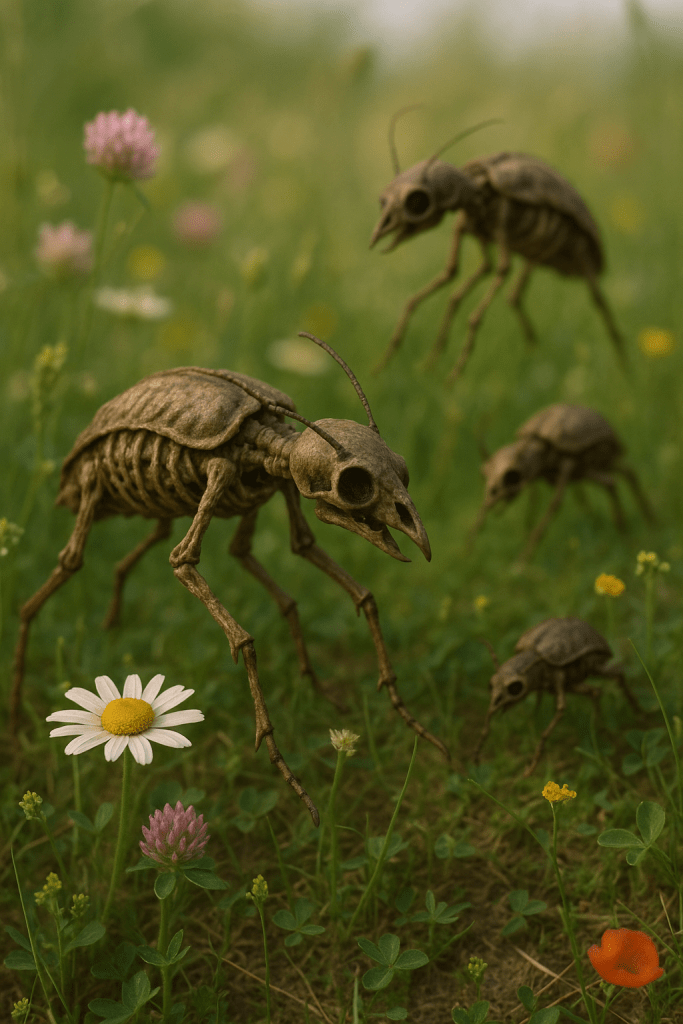
Apparently the argument goes something like this …
One of the major causes of global warming is the increasing levels of CO2, chiefly from our burning of fossil fuels. Plants (and thereby insect meadows by extension) are supposed to be our saviours here because they breathe in CO2 and, via photosynthesis, use it to grow. More CO2, more growth, more food for some insects.
But …
Although there’s more vegetation, it’s actually pound-for-pound less nutritious than before because it’s mostly just more cellulose, the plant fibre that’s difficult to digest and not very nourishing to boot. The other minerals and nutrients are present in about the same overall amounts as before meaning that the insects are chewing through more cellulose but building up less cellulite. In other words, the plants have become the equivalent of plain rice cakes: you can live off them but why would you want to?
So forget that insect plague. As that same summary puts it, we might be heading for an insect apocalypse anyway …
 The Blog About Fog