I’ve written previously about how the city of Not-Bielefeld is continuously trying to live up to its reputation as a bicycle-friendly city. Noteworthy efforts here, if only because they miss the mark completely, include the city testing out a gangrene wave for bikes and the University of Not-Bielefeld proudly installing the most expensive bike racks known to mankind.
Part of the problem here is that there is quite literally little room for improvement. Despite its reputation, Not-Bielefeld is not really laid out for bike traffic. (Or even car traffic for that matter, with most of the major roads being a single lane in either direction.) There are very few dedicated bike paths and the few that do exist are designed more to promote bikes as a form of recreation rather than as a form of alternative transportation. Or, in other words, the paths don’t really go where any bike commuters need them to.
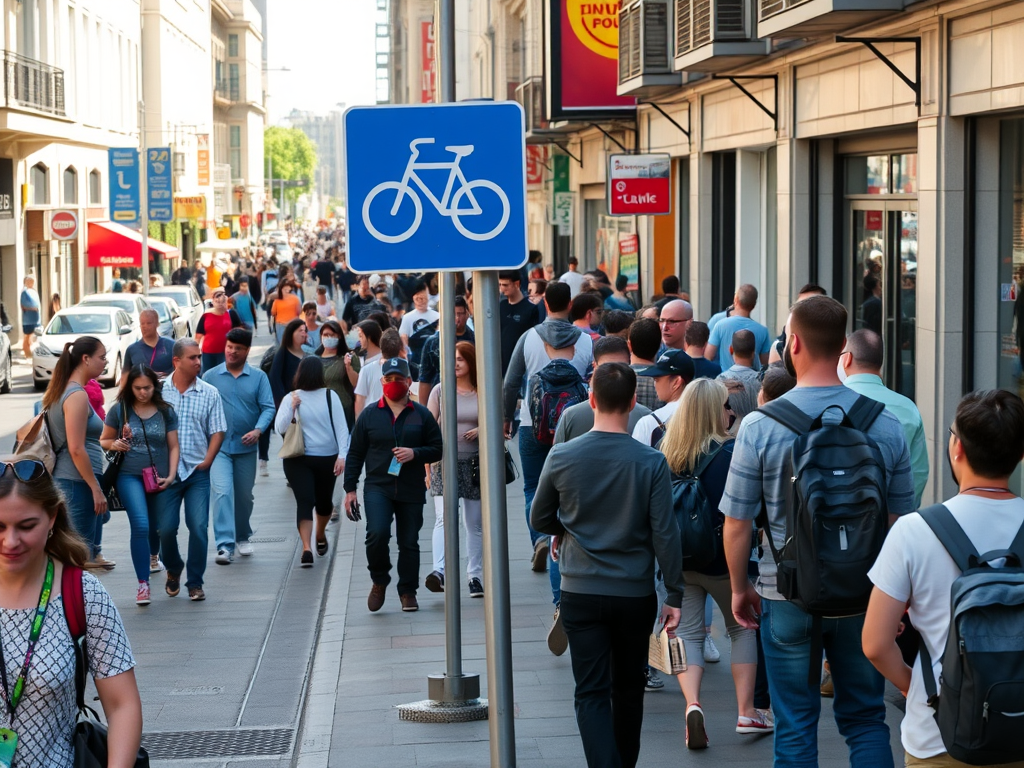
Instead, most of the bike routes are simply vaguely divided sidewalks shared with pedestrians and all the potential chaos, ambulance rides, and insurance claims that mixture conjures up. Even that green wave is shared with pedestrians with the additional insanity of oncoming bike and pedestrian traffic on the same 3.5 meter wide stretch of sidewalk.
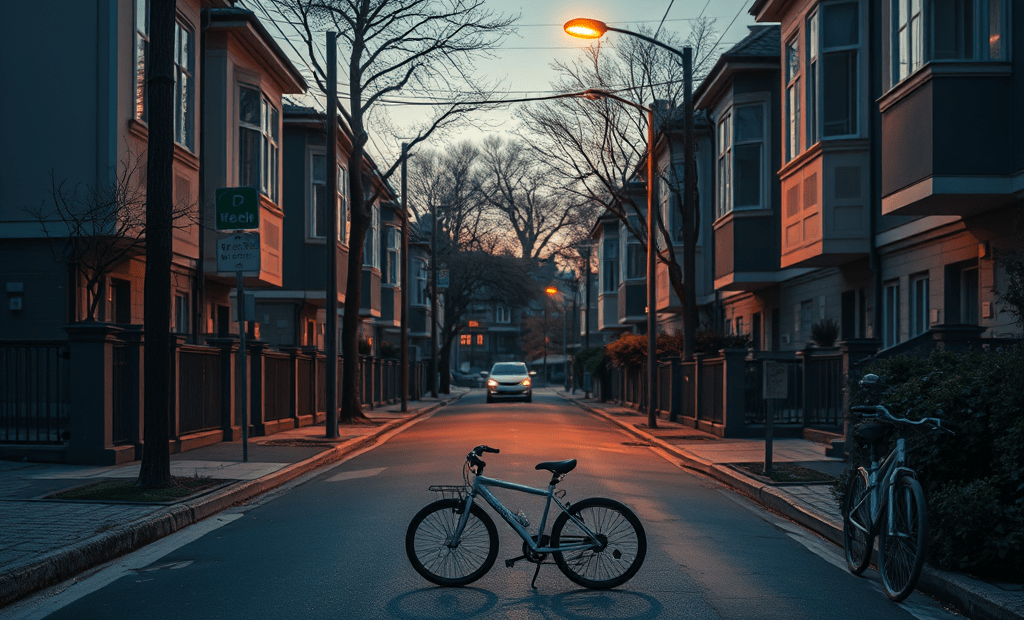
Therefore, an alternative solution that the city has been increasingly implementing is to declare some streets as “bicycle streets”, where except for the local residents, any car traffic is forbidden. One of the latest of these transformed streets is along a route my dog and I regularly take walking to work.
As potentially good as the idea is in general, there are a lot of weird things about this particular bicycle street. For starters, it’s a residential road that really didn’t see that much traffic beforehand, either from bikes or cars. It also runs parallel to some more major streets a couple of blocks removed on either side of it, one of which is the one where the city of Not-Bielefeld installed that bicycle green wave only a few months later. So, once again, the city is really just burning more money on another bike route that most bike commuters will tend to shun and, given that green wave, the city seems to want them to shun as well.
Moreover, if a bicycle street is really meant to facilitate commuting, it should get the right-of-way at any intersections. And the city proudly did this for this street, but with one major exception, namely the crossing road that leads to the University. So, right at the midway point of the bicycle street, any bike riders have to come to a screeching halt. As does any common sense. Although the city did install the equivalent of a pedestrian crossing where the cyclists can hammer away at their little button like a lab rat thinking that it will get its cheese faster that way too, they forgot to also install a traffic light for them for some reason. Instead, the bike riders have to crane their necks look at the pedestrian lights to know when it’s safe for them to cross. Merely annoying for the cyclist who pushed the button, but a downright gamble for any approaching the intersection. And, like with any pedestrian crossing on any only moderately busy road, it’s more of a nice (after)thought than anything else. As before, the bikes usually cross according to any gaps in the traffic rather than according to what colour light they see, with the end result that the cars are often dutifully waiting at their red lights for all the cyclists that equally dutifully pressed their buttons but nevertheless crossed the road two minutes earlier.

As always, it all makes you wonder how serious the powers at large really are about their environmental initiatives. (Or if they have any concept of reality.) What good is a bicycle street with a stop sign in the middle of it, especially when that intersection presumably leads to a place that the bicycle traffic presumably wants to go in the first place. I mean, they’re giving the right of way to a two-lane road where the speed limit is a miserly 30 km/h and where they specifically set up the street parking as a slalom course as a further traffic-calming measure. By contrast, the city is apparently mulling over the idea of having that green wave dictate the timing of the traffic lights on the road it runs along, thereby effectively giving the bikes the right of way. And that road is indeed a major artery in the city with a 50-km/h speed limit. (However, given that this is Not-Bielefeld, think “rectal” for that artery as opposed to “carotid”.)

On the practical side, how is this bicycle street even vaguely enforceable? Strictly speaking—and we are talking Germany here where strict represents the minimal, if grudgingly accepted, standard—”residents only” means that guests, Amazon, and repairmen can’t come calling anymore. At least not by car. And let’s not even start to think about anyone moving either in or out of a house there. Admittedly it’s understood that “residents only” includes “and associated activities” but then interpretation is not exactly something you want in traffic signs. Otherwise they begin to resemble signs from God, if only because more motorists will be talking to Him sooner than they might have otherwise wanted.
On top of that, although I did say that this street is a residential road, it’s really a mostly residential road that also contains a handful of businesses and some doctors’ offices. How do you even begin to sort out those customers and patients from those people just looking to use the road as an eerily empty shortcut? The cops (hopefully) have better things to do and any automated camera traps will just end up costing the city even more money for setting up the resident database and for all the court hearings from all those customers, patients, and Amazon drivers that were legitimately driving there.
Finally, comes the irony. Despite this now being a bicycle street, the city of Not-Bielefeld is investing major time and money in constructing new street-parking spaces along the road. Makes perfect sense to me: fewer cars obviously require more parking spaces. Or maybe its just some form of compensation to the residents for reducing the amount of annoying car traffic along their street. More to the point: almost all the houses there have driveways. If they didn’t need designated street parking before, why do they suddenly need it now? On top of all this, it’s not really street parking per se (which might inadvertently act to also calm the traffic along the road) but instead the partial bricking over of some front lawns to create the new parking spaces. Or, in other words, sacrificing the environment yet again to foster some environmentally friendly (PR) initiatives.
And then all this for a whole 42 spots, obscurely promoted by the city with the tagline Mehr geht nicht (“more is not possible”). Google Maps shows that there are about 140 properties directly fronting onto the road, with about an equal number behind that but with road access. That makes about one parking spot for every seven properties, a ratio that starts plummeting faster than a midair chicken when you consider that small apartment complexes are found on more than a few of those properties.

In the end, it’s strike three for Not-Bielefeld and its bicycle initiatives. Nearly two and a half years on and with construction of the street parking in full, slo-motion swing, there’s still more car traffic, even apparently legal car traffic, than bike traffic along this road.
On the plus side, it’s still a nice stretch to walk along with my dog …
 The Blog About Fog