
I have to admit that this little gem passed me by for the longest time, in part because I don’t read those mostly self-serving pieces of propaganda (AKA press releases) put out at far-too-frequent intervals by the University of Not-Bielefeld.
All last summer there were some serious excavations going on in front of one of the buildings on the main campus. Turns out that it was all part of the University’s new found commitment to becoming more environmentally friendly. And, indeed, it has all the hallmarks of the University’s overall climate policy: unraveling a good intention with unnecessary gimmicks.
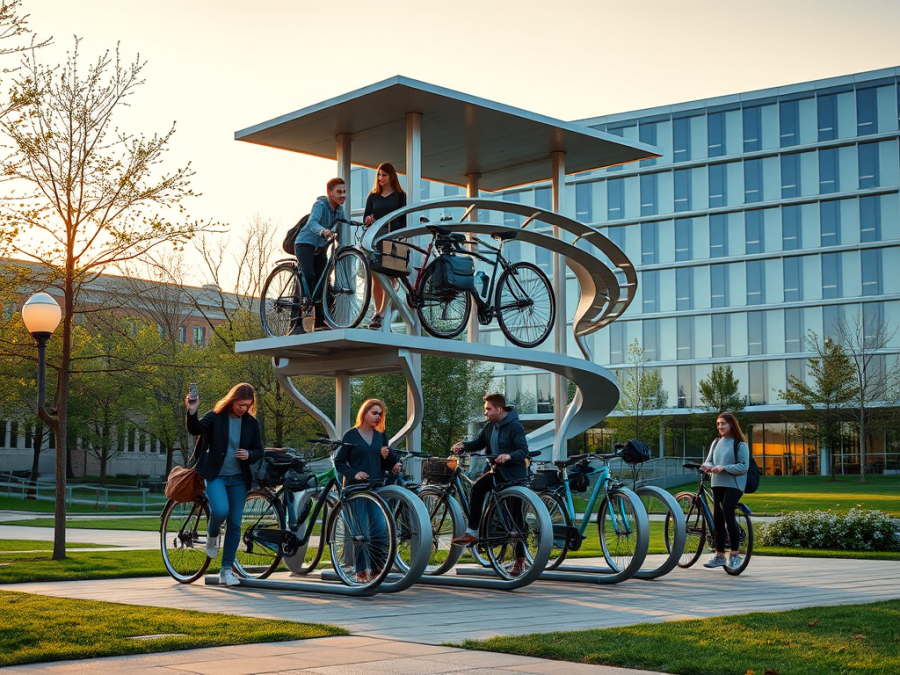
The heavy-duty construction was all for installing a new set of bike racks. But, not just any set of bike racks of course. Noooo. With the University proudly accepting (and even more proudly promoting) its role as the last defense against environmental oblivion, the solution to saving the planet obviously lies in roofed-over, double-decker bike racks. (Or to doubling the number of sweaty (or rain-soaked) students in your classes as compared to before. Same overall impact.) That’s it. And we’re not even talking any of those fancy motorized elevators like you have for cars where parking space is at a premium. Just some cantilevered bike racks powered by elbow grease on a university campus where space really isn’t an issue. At least they listened to my suggestion about making the roofs green (admittedly before I’d actually made it) but too bad they chose to do it on the smallest possible roofs on campus.
But then comes the bottom line for all this, which, appropriately enough, is flooring.
The overall price tag for this latest act by the University to combat global warming? A cool 1.4 million EUR. That‘s just north of 4000 EUR for each of the 340 bikes that can be parked there in all their luxurious glory. Or, for even more perspective, even further north of 8000 EUR for each of the extra 170 bikes that can be parked in them lofty penthouses compared to on plain ol’ low tech asphalt.
And even the (green) roofs are more of a gimmick than anything else. Yes, this is northern Germany where the winters are charitably described as “moist”. But those roofs only help keep you dry the whole time you aren’t actually on your bike. Granted, no one likes to start their bike ride by squishing down onto a soggy saddle, but there were other roofed-over rack stands that they could have converted into two-story jobbies instead. In any case, 1.4 million EUR will buy you a literal ton of 2.99 EUR saddle covers. Even without any bulk discounts …
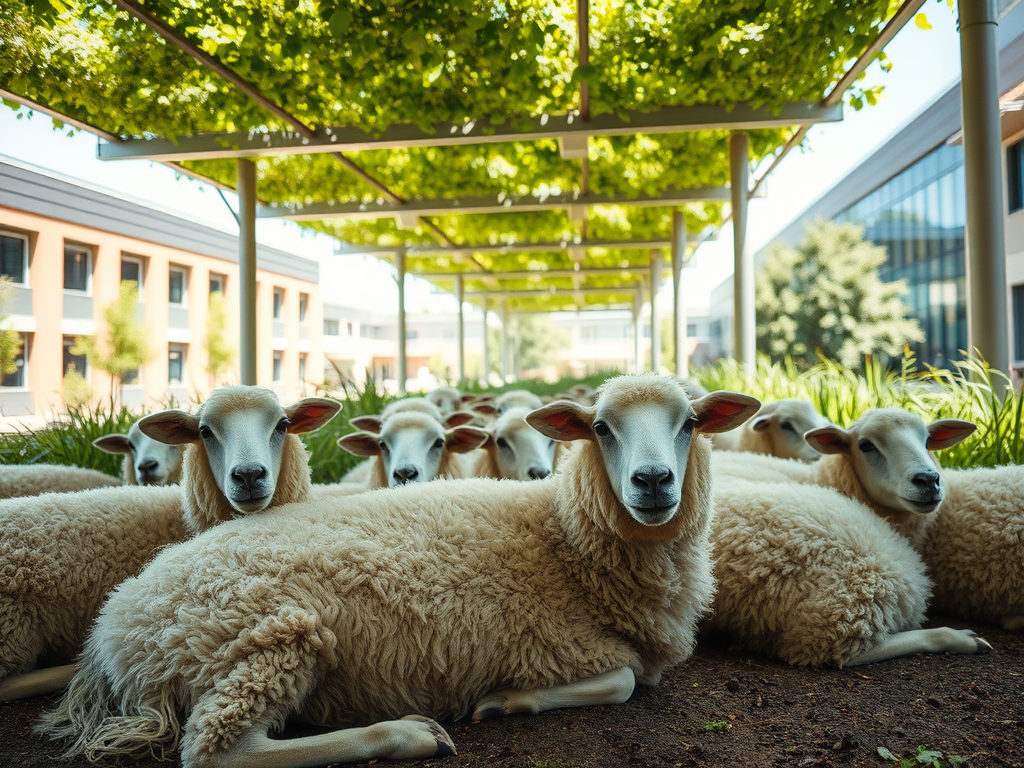
(Hate the idea of environmentally decimating plastic saddle covers, especially because God only knows that there’s no plastic to be found anywhere else on a bike? Then let’s splurge on lambskin covers for an extra 7.50 EUR a cheek. No. Wait. Those 1.4 million EUR at hand would mean that a lot of animals would be suffering. Hmm. Maybe adding even more concrete to the ecosystem is indeed the eco-friendly way to go.)
In the end, apart from wondering what all the months-long construction was for and where all that money really went to, you also have to wonder that there are people from the University willing to go on record to double down on this double-decker disaster. The word-for-word translation of the quote from the Head of Building Management was that “It was worth it.”
But then it’s this kind of fiscal arithmetic that also explains why there’s nothing left in his budget to repair all the broken doors, leaky roofs, and drafty windows plaguing the buildings on campus that he’s also responsible for …
 The Blog About Fog