
In a recent post of mine about AI, I took some potshots at the new AI features that WordPress had rolled out through its Jetpack plugin. A couple of blog posts later and the AI still hates the way that I write and I still hate its suggestions for titles for my blogs. So, we’ll call it even up to now …
(Sort of. According to the Jetpack website, “optimal readability” comes when you write at a grade-eight level. Or, put another way, for junior-high-school dropouts. (For those who, like the AI, are keeping score, my blog entries tend to hover between a grade-ten and grade-eleven level. So still for dropouts but at least for a better class of one.) Even more curiously, Jetpack seems to think that writing is a video game, suggesting on the same webpage that I can “adjust my writing in real time” according to the dynamically updated readability score. Uh, sure. (That being said, this utterly gratuitous adjustment to simply insert the word supercalifragilisticexpialidocious just increased the reading level of this post by about a third of a grade. Apologies to all those that might have been left behind because of this …))
Where I greatly and unfairly underestimated the AI, however, was its ability to generate images for my blog given the right prompt and I have been increasingly turning to it to populate my pages with pictures. It doesn’t always deliver what I want but, in many (simple) cases, it is by far an easier option to generate more and better hits than a Google image search under the restriction of the appropriate creative-commons license.

Nevertheless, I’ve noticed that the people that the AI creates tend to be extremely white, extremely young, and with extremely perfect features, especially the women. For instance, to the right is the example of the first image it produced when I asked for an “ugly person”. It’s often said that beauty is in the eye of the beholder but that is unquestionably one damn fine looking ugly person. (When I put the same request to ChatGPT, it hemmed and hawed a lot at first, saying that it could produce a picture of a face with “unique or unconventional features” albeit one that would still be “respectful” and, in the end, gave me the obvious caricature below via DALL-E.)
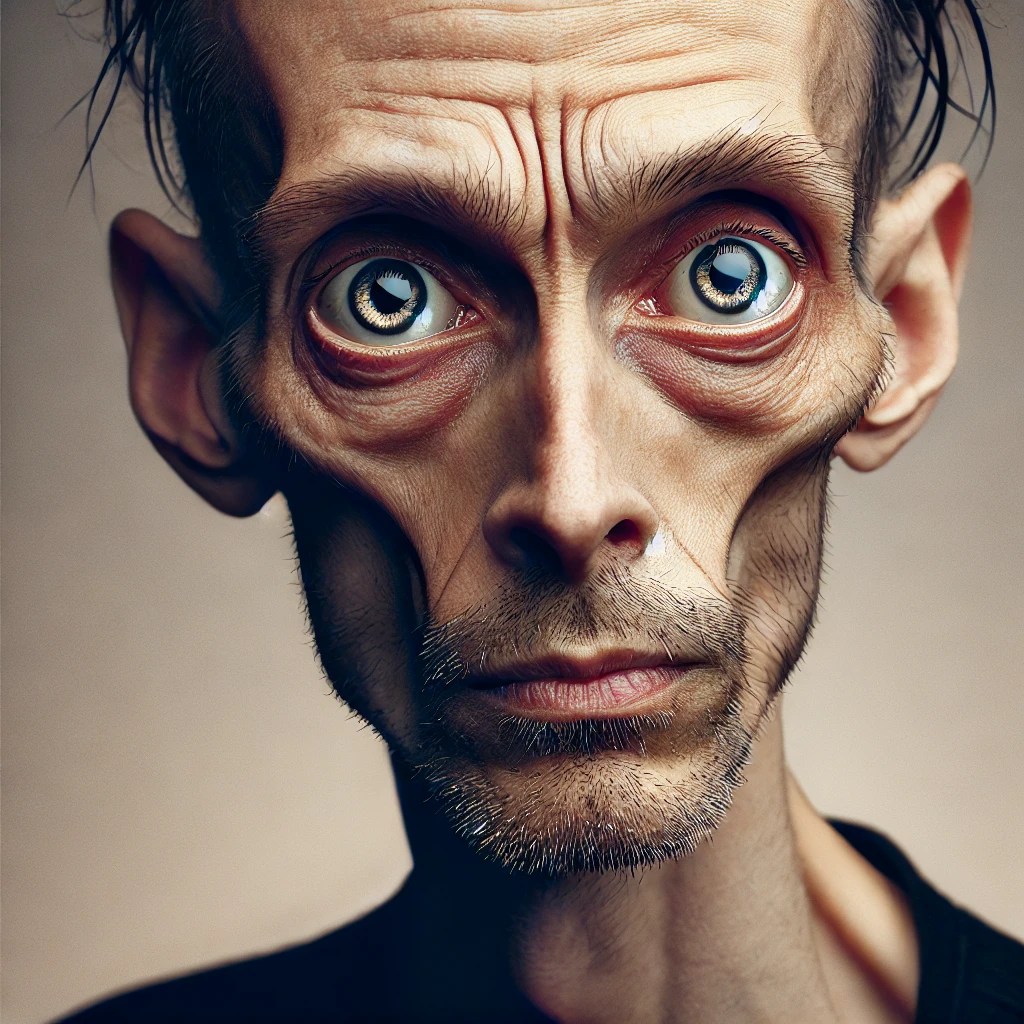
Now, there’s no shortage of articles about the “pale, male, and stale” bias also infecting AI, something that one firm confidently predicted would be addressed by 2021, but there seems to be more to it than that. For one thing, pale, male, and stale typically refers to middle-age white men—hi there!—and, unless all these people are from the Middle Ages, none of the pictures being generated for me are getting anywhere near that age bracket. For another, where is the bias coming from? By all accounts, AI now has the entire internet to train on and a quick Google image search for almost anything spits back a lot of non-white, non-young people in the pictures, most with definitely non-perfect features. Or, in other words, more what your average person more or less looks like.
I know that the A in AI stands for “artificial”, but this doesn’t mean that the selection of people it throws back at us has to be as well.
 The Blog About Fog