
Since Gutenberg, the single, greatest invention to further the nefarious causes of admin has undoubtedly been e-mail. (Now spelled increasingly frequently without the hyphen for greater efficiency.) Whereas before the printing, folding, and stuffing of countless pieces of paper into countless numbers of envelopes meant time, effort, and the omnipresent threat of paper cut related leaves of absence, literally hundreds of helpless, unwilling victims could instead be reached with just a few mouse clicks.
(Yes, I know. Those who have been following this blog (hi mom) are now pointing out that I previously stated that German admin lives and dies with paper. It does. How else can you describe a system where they refer to paper-free examinations despite having to submit a signed, paper copy of the grades? Or, for instance, whereas corona has caused our Institute to (finally) accept and archive digital documents, every form that reaches our Faculty has to be printed out. The distinction here is that the paper is meant to torment us, not them. Upon their return home, the forms are usually just filed away in the appropriate drawer.
Or, analogously, as Representative John Conyers admitted to Michael Moore in the movie Fahrenheit 9/11 when asked why virtually no congressman had read the Patriot Act, “Sit down, my son. We don’t read most of the bills.“, something that would appear to a be problem the world over.)
The second greatest invention, of course, has been the listserver for when even a few mouse clicks are a few too many …
Time was when the admin types had to add everyone’s address to each e-mail individually, the digital version of stuffing envelopes with carpal-tunnel syndrome replacing the paper cuts. Now you add each address to the listserver once and it’s bombs away in just two clicks!

And bombardment is really the only word to describe what’s going on these days. Concomitant with the installation of new software a few years ago that made the setting up and using of listservers incredibly easy, their use has exploded here at the University of Not-Bielefeld and so have the number of e-mails coming around. Whereas the little bit of effort involved before might have made some admin types question if sharing the information was really worth it, the current complete lack of effort makes the answer to that question an automatic yes.
And everything happens via listserver now.
I’m not kidding. I’m on at least 25 of these lists, representing a diverse swath of every digital minority in the University: all staff (ok, not really a minority), all profs, all users of the HPC facility, and then—get this bit of fine German engineering—all teaching staff in the University, all teaching staff in my Faculty, all teaching staff in my Institute, and all teaching staff in my Institute teaching bachelor courses. And on and on it goes.
Anyone can create a mailing list and they can add anyone to it. But, unlike a true listserver, the only way to remove yourself from the list here is presumably to remove yourself from life. (Which is increasingly tempting some days …)
Naturally, most of the e-mails are just form letters, sent to all with the hopes of interesting a few. (Not unlike, but somewhat more socially acceptable than spam mails.) A new twist arrived the other day though in the form of one of these e-mails that was personally addressed to me. (And so starting to resemble spam that much more.) Instead of an e-mail explicitly and mindlessly blasting everyone, here was an e-mail politely, but still mindlessly, blasting just me! Us oldtimers remember this from days gone by, where we got printed form letters in the mail where our name was printed differently from the remaining text to make it that much more personal. Of course, the thrill of this wore off very quickly for everyone over 10 years of age because even without this “helpful” hint, a form letter remains incredibly easy to spot after only one or two sentences in.
Or so you’d think …
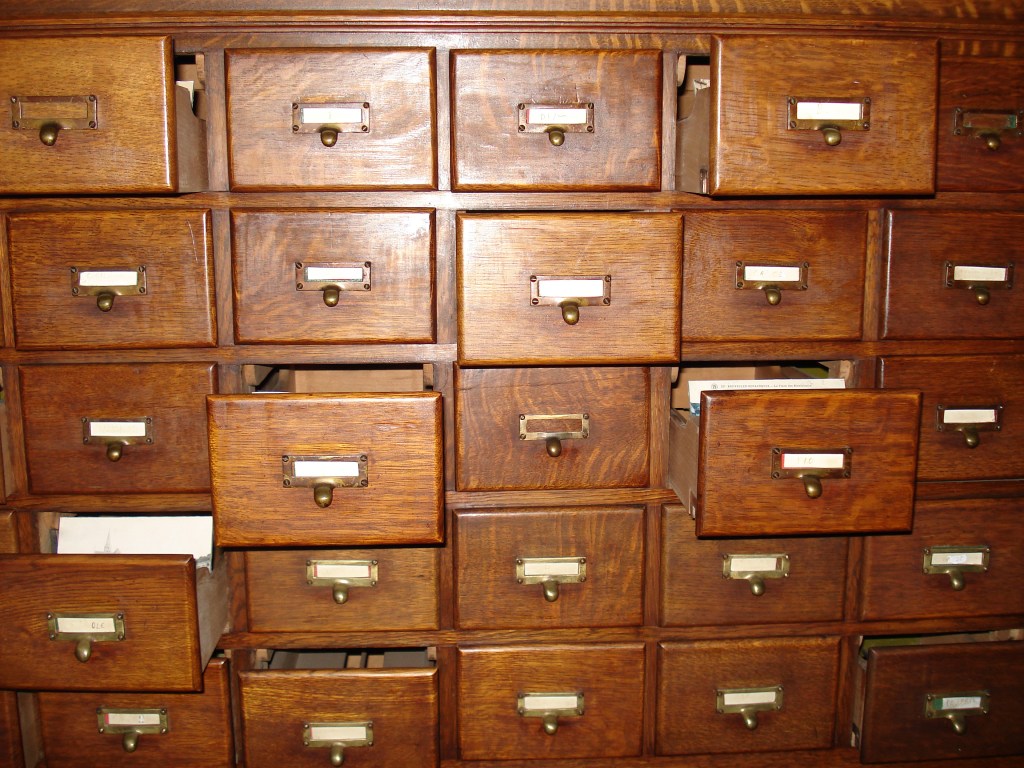
You see, not soon after I’d read the first few lines of my e-mail and filed it in the appropriate “drawer”, I received another copy of it that was personally and politely addressed to someone else in the Faculty office. Apparently, the secretary dutifully forwarded the e-mail to our Institute (because we only need to critically evaluate e-mails coming from outside the University after all), which then through the three-step magic of technology (1. Forward e-mail. 2. Select victims’ listserver. 3. Execute.) came to bother us all over again. This time with numerous undeleted and pointless forwarding headers so that you had to read a little bit further than the first few lines to come to the same conclusion.

Fortunately, the appropriate drawer was still only a single click away …
 The Blog About Fog