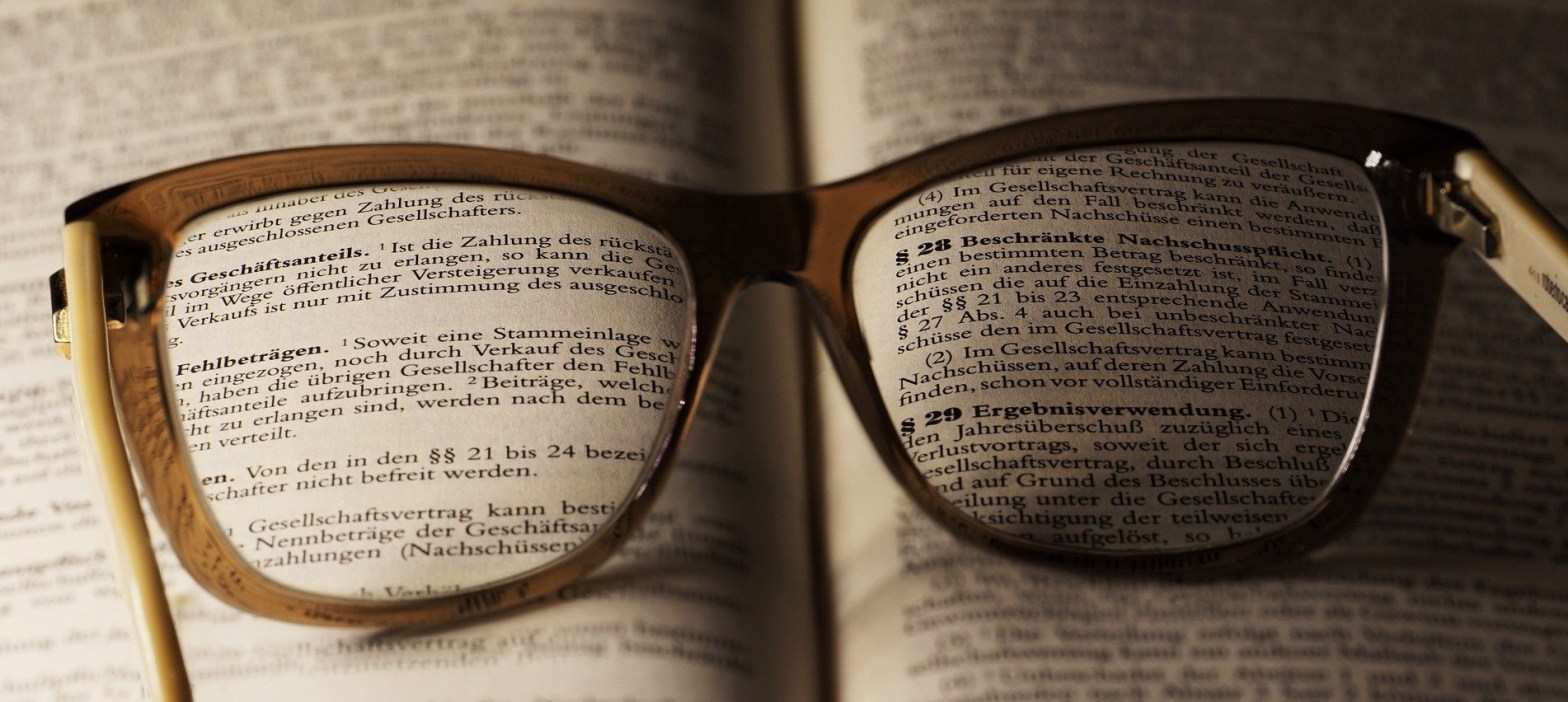
Whenever German admin wants to let you know that the substance of one of their communiques is non-negotiable, or to simply to add a little gravitas to lighten up their workday, they typically quote chapter and verse of the relevant law.

In many ways, the quote is a language unto itself, filled with all sorts of weird abbreviations and symbols. One of them is §, known more colloquially as the section sign. Apparently it’s commonly used in legal circles, but I’ve never really laid eyes on it before coming to Germany where it’s also commonly used by admin squares. (And, even though it’s a Czech book from the 1920s, the association of the symbol with admin was strong enough even back then such that Jaroslav Hašek repeatedly used § to mean “bureaucracy” or “red tape” in his unfinished six-volume novel The Good Soldier Švejk. Ah, the things you learn reading Wikipedia …) But the code continues beyond the § with all the abbreviations and numbers. For instance, in 1990, Germany finally enacted a law in the Civil Code (Bürgerliches Gesetzbuch) stating that animals are not objects or possessions and are protected by some basic rights. The proper, if obscure, citation for this law is § 90a BGBl. I S. 1762.
Ok, we in Academia employ our own weird, idiosyncratic citation methods too. But we at least provide the full reference at the end of our scribblings so as to leave out the guesswork. With admin, you just get the code without the Enigma machine. BGBl (AKA BGB) is easy because that one is cited a lot. But then there’s also BAnz AT, LVVO, VersTierMeldV, ArbSchG, BetrSichV, GefStoffV, and DGUV (these last four came once as one bundle) in addition to all the internal bylaws of the University here in Not-Bielefeld.
(I’ve always toyed with the idea of quoting some completely fictitious law in one of my responses to admin, if only to see if they’d swallow it on faith like we do with theirs. But, just toyed because I strongly suspect that they wouldn’t.)
But, believe it or not, there was a case recently where I’d actually wished that they had cited the relevant legal passage …
I’d had some work-related expenses that I wanted to have reimbursed from the University and, after some effort, finally found the appropriate form to do this. The form included an emphasized remark (remarkably in bold face and not with an exclamation point) indicating that the process could only proceed if the receipts are pasted ordnungsgemäß to a sheet of A4 paper. (And not just any old piece of A4 paper, but a DIN-A4 piece of paper.)
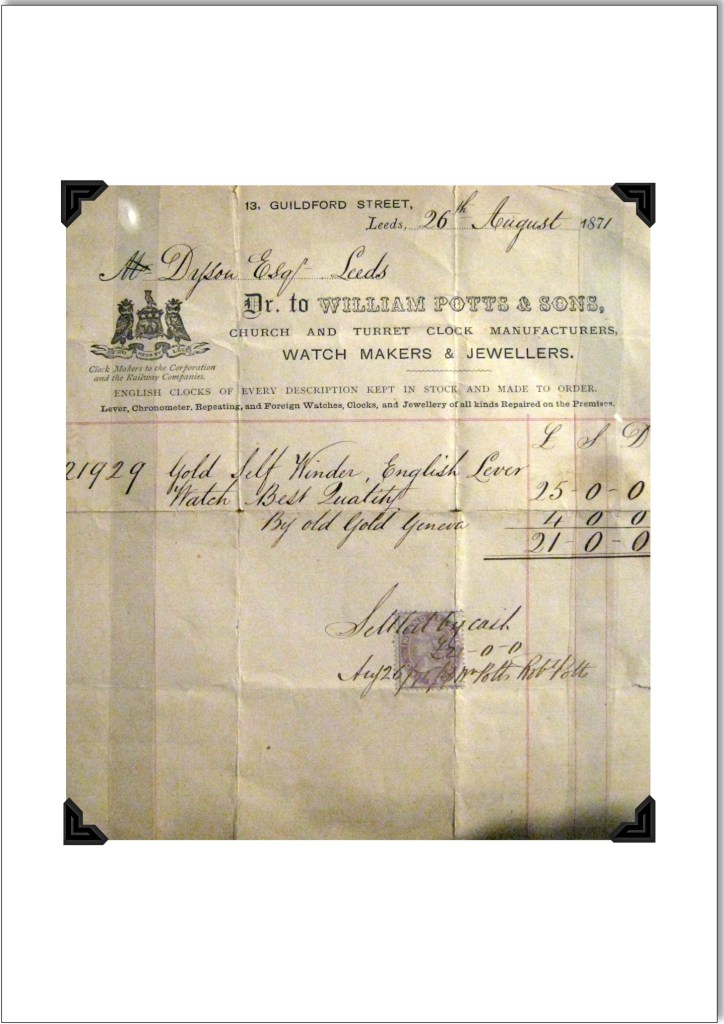
Now ordnungsgemäß is a word that is probably peculiar to the German language. There certainly is no succinct equivalent in English, with the closest being “in accordance with regulations”, making this one of those few occasions when the German phrase is actually shorter than the English translation. In any case, I never knew that there were actual regulations about how to attach a receipt to a piece of paper. (But then, Wikipedia also just informed me that there are about 30 000 DIN standards in Germany so go figure.) If there ever was a time to quote the necessary regulations, this would be it! It’s not as if most of us have taken courses in German bureaucracy or anything where you learn important things like this. Admittedly, the form did helpfully add to please not use sellotape (although the use of the word “please” technically makes it a request, not forbidden), but this still leaves a lot of possibilities. Like glue. Or those photo corner thingies your grandparents used to stick prints into an album with. Maybe Blu Tack? Bubblegum in a pinch? Even just licking the back of the receipt would also work for a bit.
In the end, it was all moot because my receipt was a piece of A4 paper, but I still can’t help wondering if I should have nevertheless glued it (somehow) to a piece of A4 paper like the instructions demanded …
 The Blog About Fog