
Right. If this blog is going to be about the absurdities of admin, might as well finally go after the granddaddy of them all: the European Union. You know, the entity of which the choking bureaucracy was part of the reason that an entire country decided to leave Europe?
(Speaking of absurdities, let’s talk about the UK for a second. Is the UK the actual country or is it rather each of England, Scotland, Wales, and Northern Ireland? Has anyone ever figured this out? Including them?)
The EU is a pretty big target so I’m going to focus (this time) on the European Cooperation in Science and Technology or COST for short, a funding body that seeks to promote networking by “European researchers and innovators” in science and technology. (Oh and Israel too. Apparently being able to compete in the Eurovision Song Contest is a prerequisite for a nation to also obtain COST funding.) Through a series of competitive grants, the COST Association funds numerous multiyear Actions to facilitate research (and probably innovative research because the program is designed for researchers and innovators) on a particular topic. It’s all big bucks / enormous Euros and has the admin chaos to match.
The admin structure within each COST Action befits that of the European Union paying the dime for the whole thing: hierarchical and overly complicated. An Action is typically divided into numerous Work Packages (WPs) charged with achieving certain deliverables. Overseeing them as well as much of the day-to-day running of the Action is the Steering Committee (SC), a group of about a dozen or so individuals (including the heads of the WPs), usually with the largest vested interest in the project. But, the more important decisions of the SC—including anything to do with the budget besides spending it—need to be approved the Management Committee (MC), a potentially monstrous conglomerate for which each country represented in the Action provides up to two voting members. It’s all supposed to act as a system of checks and balances.
My experience has been that it doesn’t because the set-up beyond this is fundamentally flawed …
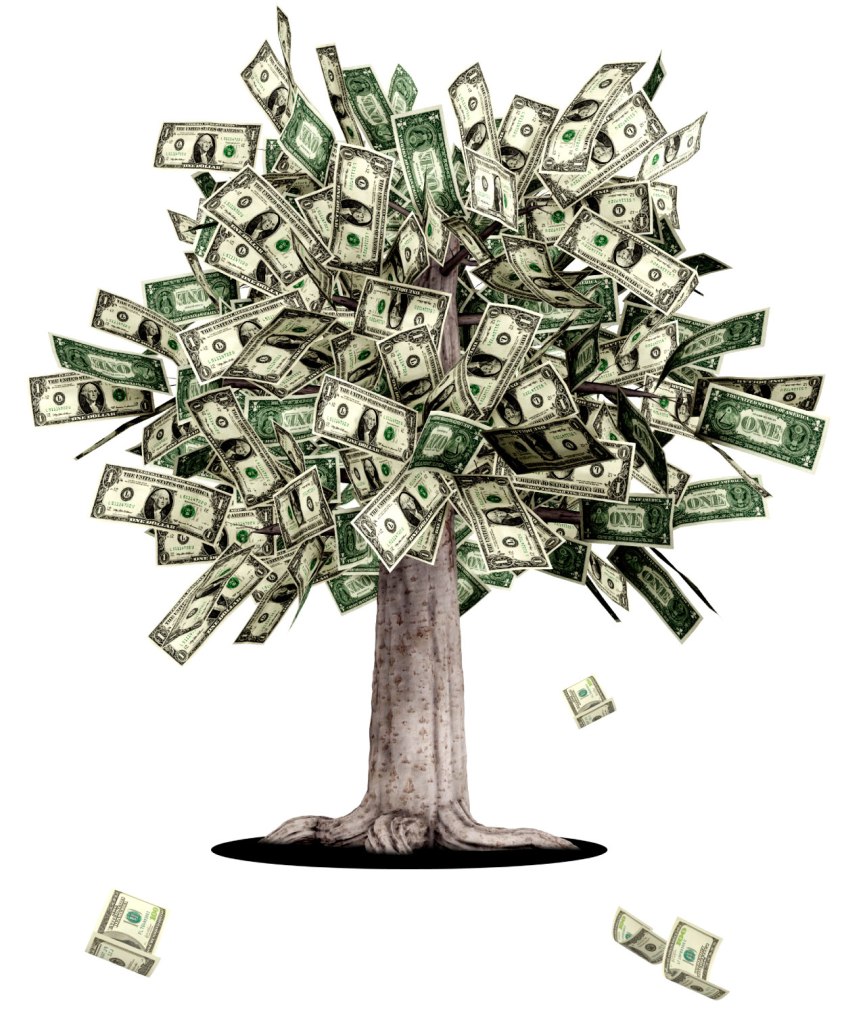
For starters, official COST policy is that literally anyone can join any Action for any reason. Relevant experience isn’t really necessary nor is actual interest for that matter. And there are some real COST pros out there who have been involved in Actions numbering in the double digits, including their MCs, and where you can only ask yourself why they are there in the first place. Not only can’t the SC veto people like this, they are indirectly encouraged to accept them because the amount of funding for any given Action is directly tied to the number of countries in it. Not quite what the early alchemists had in mind, but still a good way to turn deadwood into dinero. Who said money doesn’t grow from trees?
Even worse, the whole system is deeply skewed towards the MC passing any and all resolutions it receives. For one thing, there’s no real debate on most motions put before the MC. Except for the required annual meeting, most of the votes are done via electronic ballot. The MC members receive the motion and have to vote yea or nay within seven days. Want clarification about the motion or even, gasp, to debate it? No point. At least for the electronic votes, there literally is no mechanism provided for any debate and it’s a moot point anyway because the voting is already underway.
That’s bad enough, but the basic voting system is also rigged in favour passing the motions. Here’s why. Although each country in the MC has up to two members, it only has one vote. Both members have to vote the same way or else the vote for that country is invalidated. Topping that off, any votes that are not cast, say by any MC members simply along for the plane ride, are counted as approving the motion tacitly. (This is very much different than an abstention, which are neutral and also not an option on the electronic ballots.) In so doing, COST has managed to literally take the stuffing out of ballot-box stuffing. Thus, to reject any motion, you have to get all voting members from a majority of countries in the MC to vote against it. That’s sounds pretty much like how it should be. Instead, what sounds like a load is that the system means that motions can get passed even when absolutely no one votes for them.
Here’s an example of that perverse nay-is-yea scenario in Action …

Imagine a COST Action comprising 20 countries and where each of those countries is represented by two people in the MC. For 19 of those countries, one member votes against the motion whereas the other doesn’t vote, resulting in 19 split votes that are ignored. Both the MC members from the last country don’t vote at all resulting in an imaginary thumbs up that overrules the 19 actual thumbs down that were cast.
Comes the next bit of subversion …
For any physical MC meeting to be legitimate, it has to achieve quorum: at least one member from a certain percentage of all the countries in an Action has to be present. There’s no such explicit requirement for an electronic vote. Theoretically, because all MC members received notice of the electronic vote, all could be argued as being present for it. But there’s a big difference between having the opportunity to be present (receiving notice of the electronic vote) and actually being present (reading it, if not thinking about it). Essentially it’s the same difference as receiving your voting information in the mail and actually casting your ballot. So, even if absolutely no one votes in an electronic vote, the motion still passes because of the tacit approval of the tacit quorum. This rubber stamp is perhaps nowhere so blatant as for the Work and Budget plans for each Grant Period, which are explicitly already approved by default even before anyone has a chance to vote on them. Potentially even more sinister: got a tricky motion that you want to limit debate on and exposure of? Schedule an electronic vote.
Excuse me? That’s all supposed to be democratic? Which third-rate banana republic did they crib that system from?
How this all plays out in reality does, of course, depend in large part as to how active the SC and MC are, but the basic setup does make you long for the relative sophistication of the British House of Commons where they literally shout their votes across the floor at one another.
Unfortunately, this kind of “thinking” seems to be typical of the COST Association, another prime example of which being their bungled response to the coronavirus pandemic. Again, I realize that this was all uncharted territory. Nothing like a pandemic on this scale had been seen for almost exactly a century so mistakes were there to be made. All of a sudden, there was high unemployment, crumbling economies, overburdened health-care systems, and a generally uncertain future to be dealt with. It was unprecedented in this day and age. (At least for western society.) Even those few outliers that actually benefitted from the pandemic—the pharmaceutical industry, companies making masks, and manufacturers of alcohol (for either internal or external use)—took some time to respond properly, something that we’re still waiting for from the COST Association.
Instead, their response, which they have applied rigorously and unwaveringly to this very day, was to do absolutely nothing at all and so make it just that little bit harder for all the Actions they were funding and were supposed to be supporting.

You see, as much as the COST Association goes out of its way to deny it, it pretty much is a travel agency. One for nerds (and innovators), but a travel agency nevertheless. Because the explicit goal of COST is promote face-to-face networking and training to further some common objective, the vast majority of the funding to the different Actions relates to travel costs. Ok, you can throw in the design and running costs of your super fancy website, but it’s still all mostly plane tickets, hotel rooms, and food. (Mostly paid out at a standard flat rate to keep the workload even lower for the COST Association.)
Of course, all this activity came to a screeching halt in 2020 thanks to the pandemic when the combination of closed borders, quarantine regulations, and simply trying to get by at home meant that most people were unwilling or unable to travel. Although the individual Actions quickly accommodated to the new conditions (e.g., through video conferencing), the COST Association didn’t. For the longest time, their only official statement was that they were “monitoring the situation carefully.” It took months for them to invoke a force majeure (the hoity-toity, legal equivalent of an act of God, just when man decides to play God) and, in the end, they not only refused to change their funding rules and guidelines, but also insisted that the individual Actions still spend the money allocated to them because of Association’s own obligations to its funding sources. That there was very little to spend this money on besides travel was beside the point. Their advice was simply to be creative, something that hadn’t occurred to them at all.

As a result, the Action that I am involved in is throwing tens of thousands of Euros of taxpayer money at open-access publishers as well as proofreaders and graphic designers in a desperate attempt to reduce our budget surplus. Many of these expenditures aren’t really furthering our goals any, but are just outsourcing work that we would normally do ourselves. For free. Instead, their only real purpose is to help the COST Association to balance its own books.
The sheer cynicism underlying all this is unbelievable. Although proofreading and the like represent allowable expenditures for a COST Action, even without a pandemic, this is only the case when they’re done by someone external to the Action. Any Action member doing exactly the same job does it for free. Moreover, two physical meetings in our Action succumbed to the first wave of the coronavirus pandemic in the Spring of 2020. However, because the COST Association was still so busy “monitoring the situation,” the lack of a force majeure meant that most of the people who had already arranged to go to those meetings had to eat their travel costs. (Ok, I know that I said that COST does pay for food, but unfortunately not that kind of meal.) Without an actual, physical meeting where you could sign the all-important attendance list, there can’t be any reimbursement.
Apparently, the COST Association represents the oldest framework in Europe for supporting collaborative research and turns 50 this year. You’d think that it would be a little more grown-up at that age …
 The Blog About Fog