
If you’ve ever wanted a good example of the old saying that time is relative, you need look no further than the admin behind teaching in Germany.
It all seems so simple going in. When I arrived at the University here in Not-Bielefeld, I was told that my teaching load was nine hours a week per semester (which, compared to North America, is indeed a load). And the reality stopped right there.
Now, you might be excused for thinking that the fantasy was in only having to teach nine hours a week and that this blog would be about me whining about how I actually teach much more than that. As true as all that is, the real Alice-in-Wonderland part about all this is in how those nine hours are calculated.
If you thought that calculus and relativity theory are impenetrable, this is the combination of them both …
For starters, an hour isn’t an hour when it comes to teaching in Germany. Not even in name. Instead, it’s formally called a Semesterwochenstunde (or SWS for short), which translates out to the incredibly awkward sounding “semesterweekhour”. More to the point, each SWS also comprises only 45 minutes, meaning that my nine-hour teaching load really only works out to a nice even, real-world six and three-quarter hours. This weird conversion, however, does mean that a double lecture only works out to 90 minutes, so not too onerous on my side and still long enough for the students to make up their sleep deficits on theirs.
Fitting in nicely with these slightly shortened hours is that most classes don’t start on the hour, but 15 minutes later. The famous “academic quarter”. Although there are worse and weirder cases of how this quarter is implemented, part of the problem at my University is that it’s not done so consistently. Lectures, seminars, and committee meetings all start on the quarter hour (or c.t. for the Latin cum tempore), but labs and practicals on the full hour (or s.t. for the Latin sine tempore). Now, why most classes are c.t. but only some are s.t. as well as why there even is a c.t. this far into AD is strictly on the q.t. One reason that I have heard for keeping the quarter is to give the students time to move between the classes. Ok. But given that an hour isn’t an hour anyway, isn’t this travel time sort of already built in? Worse yet, if you have a c.t. lecture followed by a s.t. lab, you need time travel and not travel time to arrive punctually.
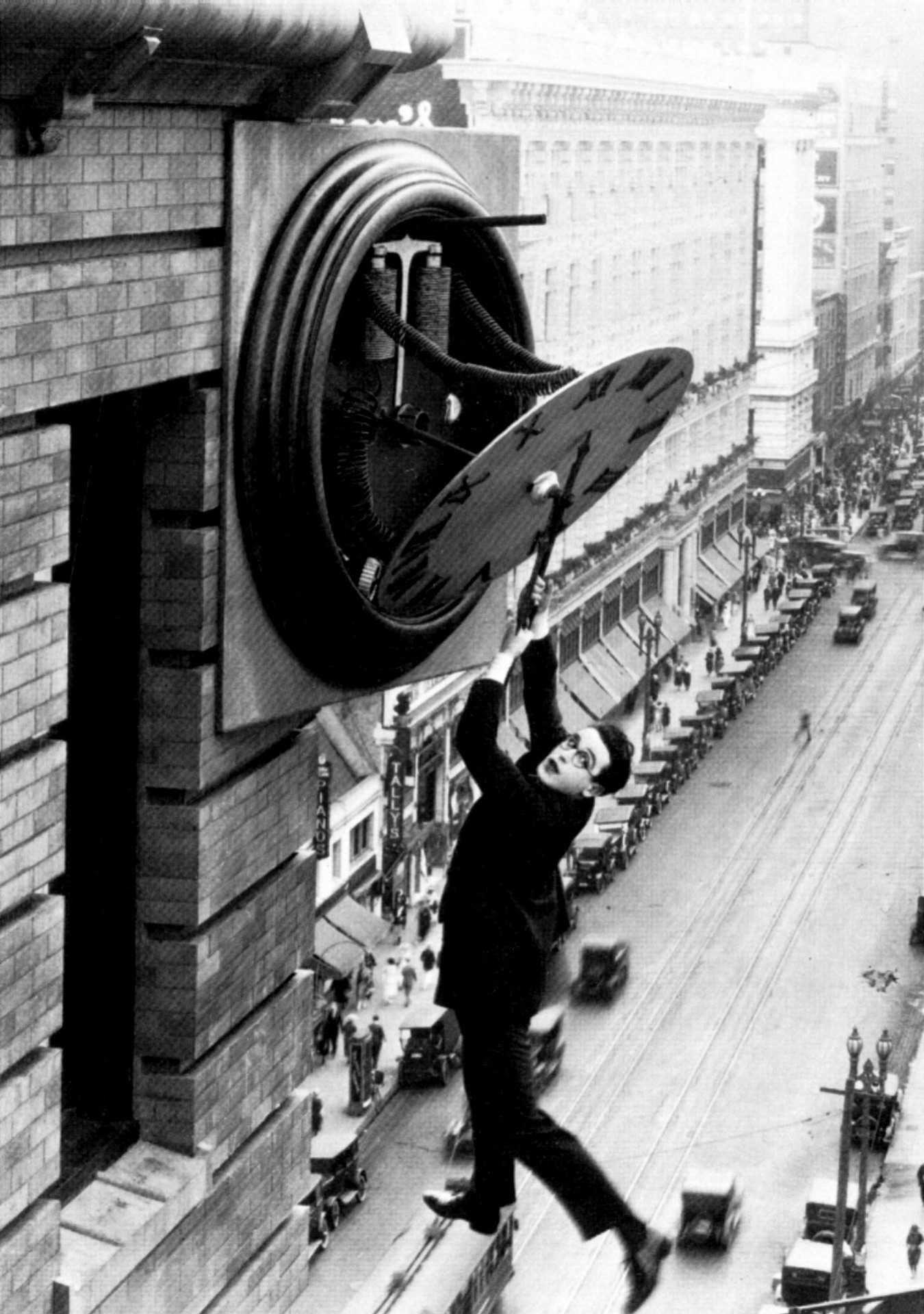
And not only do different classes start at different times, but, bureaucratically speaking, they also last for different amounts of time in terms of their contribution to your teaching load. One “hour” of a lecture, seminar, or practice session (Übungen) all count as one whole hour. All good. By contrast, one hour of a practical (Praktika) from the admin point of view is really only half an hour and one hour of an excursion is only 20 minutes. And all the work that we do surrounding and supporting all these endeavours—writing and preparing lectures (especially in these corona times when we have to record them), grading assignments and tests, answering e-mails, or just plain ol’ answering the students’ questions and helping them to understand the material—is worth nothing at all in terms of our teaching load. All that counts is how much time we spend in front of the classroom and then often not even that.
For instance, in the eyes of admin, some teaching doesn’t count as teaching, like the supervision of Bachelor or Master theses. The reason given to us for this is that supervising these projects belongs to our job description. (Unlike, say, teaching …) However, when I offer a Master student an “independent research module” (independent in the same sense that George Carlin holds self-help books to be self help), which basically amounts to the same thing, that does count as teaching and I can tick off 2 SWS for it. This clearly makes no sense whatsoever, not in the least because “independent research”, if taken verbatim, clearly means “no teaching involved”. Otherwise, it’s just research in the sense of George Carlin again.
All this “new math”, of course, has its repercussions. For starters, there’s a new impossible German word to learn: Lehrveranstaltungsstunde (“coursehour”) or LVS for short. Again, this isn’t an hour nor even an SWS. What it is is the SWS multiplied by the correction for the type of course: 1 SWS = 1 LVS for a lecture but only 0.3 LVS for an excursion. And admin loves to use both terms seemingly randomly on us.
In more practical terms, we also don’t really offer any Praktika in my Department anymore, but Übungen instead. (So actually less practical terms / semesters.) No one, not even the admin types, really knows what the difference between them is other than you seem to do (or get credit for) only half as much work for the former despite being there for the same amount of time. And the juicier lectures and seminars also tend to be the exclusive domains of the profs, leaving the undervalued rest to the teaching assistants. The latter can have it really tough because of this. There are certain positions that are largely designated for teaching (Lehrkräfte für besondere Aufgaben or “teachers for specific duties”) and the system makes sure they do nothing but. Because they don’t get to come anywhere near the lectures and because we give them shittier exchange rates than most banks do, their actual teaching load of 18+ SWS translates into nearly 40 hours per week. Time for research? Only if you don’t need time to live.
Even the students are subject to these weird time dilations. They also don’t have normal hours, but “workload hours” (if you thought that the Bible was great for inventing or subverting units of time, admin wins hands down), which is the amount of time that an average student would need to complete a given task. (The average student, of course, being another work of fiction. Apart from the problem of knowing what the average student is capable of, when was the last time anyone ever gave a student a C? Although a C should represent the “average grade”, it’s practically a failing grade nowadays.) So, a course that represents 10 semesterweekhours for us teachers becomes 450 workload hours for the students. Teaching assistants aren’t the only ones getting shitty exchange rates. But, then again, whereas we teachers don’t get to count any of our prep work before or after the class, the students get to count everything they do outside of the class in full. My 20 minutes worth of excursion is also a full hour to them. (Or maybe just feels like it …)
To top it off, our Department teaches Master courses in two seven-week blocks each semester. Again, some quick math. 450 workload hours divided by seven weeks is a little north of 60 hours per week that the average student is expected to put in. When I tried to point out that this might be against the labour laws, if not actually illegal, my quick math quickly became administratively adjusted. Although the teaching portion of our semester is only 14 weeks long, the semester technically stretches over an additional 12 weeks (making 26 weeks in total) so that the 450 workload hours should really be divided by 13, making for a perfectly legal and humane, if utterly fictitious, 35-hour week. Never mind that we don’t often use those extra six weeks and actually can’t in half the cases (i.e., all those blocks that fall into the first half of the teaching time that can’t be extended into the extra part of the semester on the back end). It all looks good on paper. And paper is what German admin is all about.
It also all sort of makes sense now why it took a German to come up with the theory of relativity …
 The Blog About Fog